
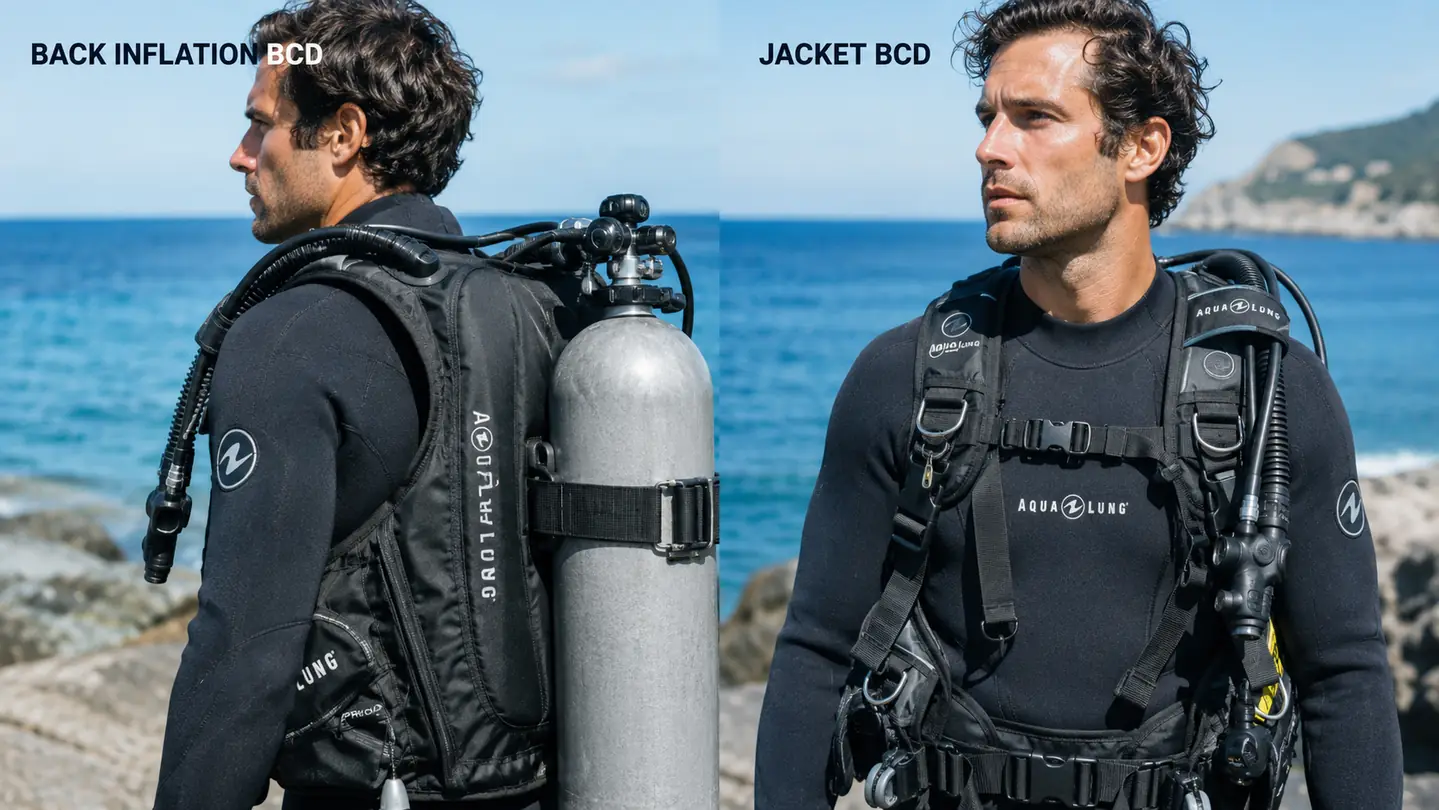
I will give you the whole article in one sentence, because the marketing around buoyancy compensators will drown you otherwise. A jacket BCD wraps the air cell around your chest and sides, like a life vest. A back-inflation BCD puts one air cell behind your shoulders, on your back. That single placement decides how you sit in the water, how your ribs feel after a day of dives, and whether you can hover nose-down over a ledge without your feet sinking. I dove rental jackets for six years, then spent two years on the Cressi Patrol, Cressi's travel-friendly back-inflation BCD. Honestly, they dive like two different sports.
The Patrol is not the cheapest thing on the rack, and it is not the right call for every diver. A jacket still does a few jobs better, and I will name every one of them instead of pretending one design beats the other everywhere. But if you are tired of renting, tired of a BCD that squeezes your chest at depth, and ready to glide along the bottom in a straight horizontal line, the placement of that air cell matters more than the brand on the collar. And if you are new to the sport, read the jacket side just as carefully. I am not a missionary for back-inflation. I am a carpenter who spent six years in one design, two years in the other, and I would rather you buy what fits your diving than what I happen to pack.
The table below is my honest scorecard after a year of A/B diving, and I want you to notice that the jacket wins real rows. Surface floatation, price, learning curve, that is a legitimate haul. This is not politeness and it is not manufactured balance. A jacket earns those rows in the water. The Patrol wins the rows that matter most to a regular diver on a long dive: trim, comfort at depth, and how the rig travels. Read all of it, not just the column you already want to win.
| Cressi Patrol (Back-Inflation) | Jacket BCD (Cressi Start) | |
|---|---|---|
| Where the air sits | One cell behind your shoulders, on your back | Cells wrapped around chest and sides, like a life vest |
| Trim underwater | Sets you horizontal; nose-down work feels natural | Pitches you head-up; you fight a backward tilt to look down |
| Comfort at depth | No cell squeezing your ribs; chest and belly stay free | The ring tightens as you add air, a band of pressure as you rise |
| Surface floatation | Sits you lower; you work a little to keep your chin up in chop | Floats you upright, head well clear, nearly effortless |
| Price | Travel-tuned rigs run higher; you pay for the lighter build | Budget jackets start lower and show up in every starter bundle |
| Travel and packing | Light and folds flat, carries in a duffel | Bulkier and heavier; more bag, sometimes a second checked bag |
| Learning curve | Feels new at first; surface float and dump valves need a few dives | Exactly what your open-water course taught you |
| Best for | Regular divers who want flat trim and hate the squeeze | New divers, vacation divers, and long surface intervals |
How I Tested Both, the Way I Test a New Tool
I did not buy the Patrol on a whim, and I did not trust the product shots. The way I pick a tool is the way I pick a dive computer or a BCD: I use it until it proves itself. When the Patrol showed up, I planned my own comparison. First trip after it arrived, a week of boat dives, I took a rental jacket for the first day on purpose so I could run them back to back. Same boat, same water, same lead, same kind of dive. That is how I got comfortable writing the table up there.
Day one, the jacket. The shop strapped it to me, and inside ten minutes underwater the old complaint list came back exactly on schedule: the squeeze past thirty feet, the feet drifting down when I tried to study a sponge, the arch in my back by turn-around. Day two, the Patrol. Same tank, same profile, and the difference was not subtle. I wrote it in my logbook so I could not talk myself out of it: floated flat all dive, no rib pressure, hands barely needed. I have repeated that A/B on two more trips since, against two different rental fleets, and the pattern has held every time.
One honest note on setup. Back-inflation changes where you carry your weight, and your trim pockets need to move with it. It took me one dive to find the right arrangement. If you try this design and feel like you cannot get flat, part of that is the BCD and part of it is your lead and tank position. A competent shop will sort you out in five minutes if you ask.
Where the Cressi Patrol Wins
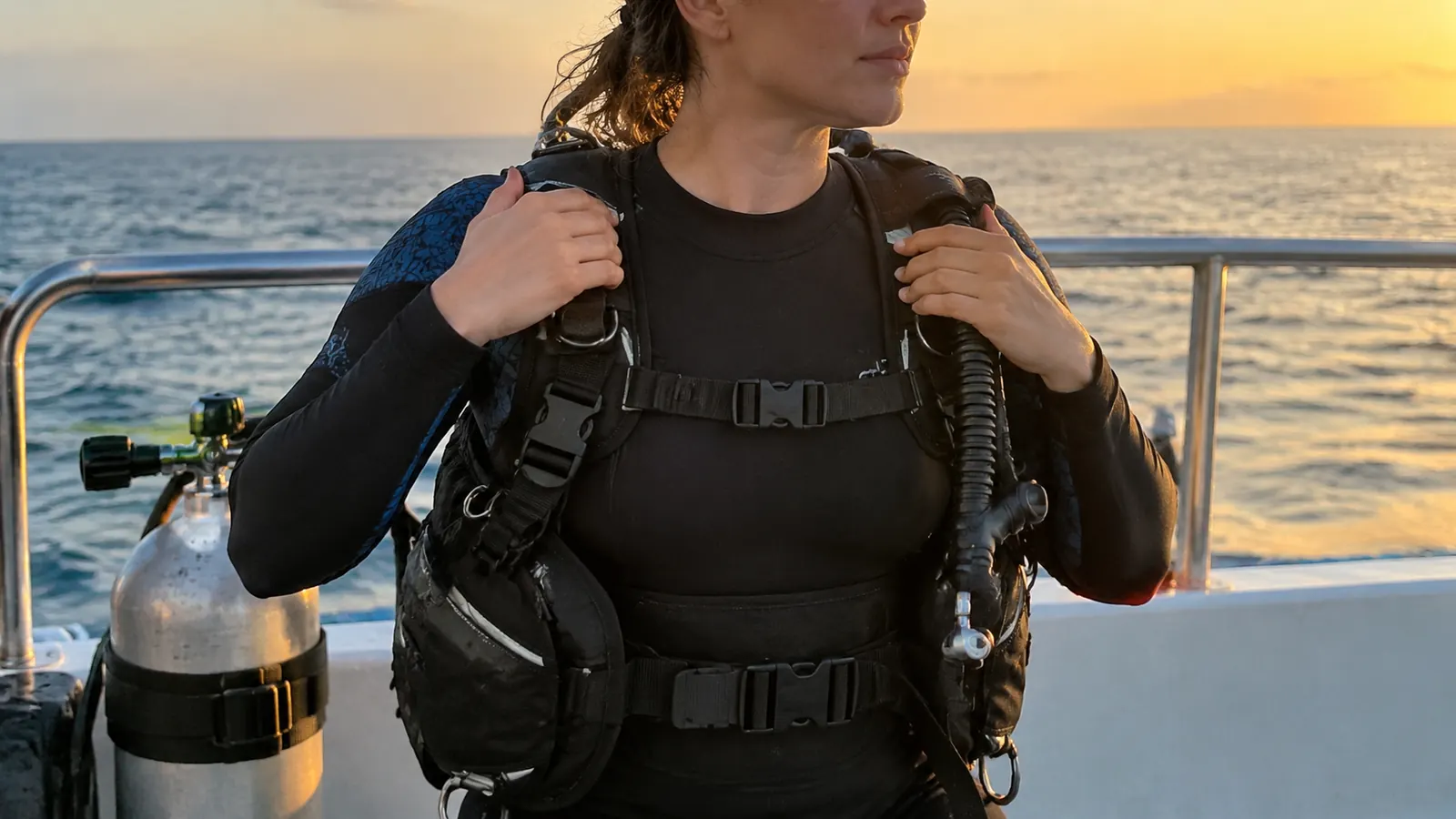
The first reason I switched is the one you feel before you can name it: I was tired of arching my back just to look at the bottom. In a jacket BCD the air collects at the top of the cell, which sits around your chest, so the natural tendency is to pitch you head-up, feet-down, like a bobber on a pond. The more air you add, the more it stands you up. The Patrol puts the whole cell behind your shoulders. Add air and it nudges you horizontal instead of vertical. On the second dive of my first trip with it, I hovered over a sand shelf off Grand Cayman with my head level and my fins level behind me, and I understood in one instant what all the fuss is about.
The second reason is comfort, and it matters more the longer your work week is. Jacket cells wrap around your sides, and every breath of extra air squeezes that ring a little tighter. Coming up from a deep dive I used to feel a band of pressure across my ribs, like a strap somebody kept cinching. The Patrol leaves your chest and belly clear. The only thing around your torso is the harness, and the straps carry the tank on your shoulders where a load belongs. It is a travel rig too. It is lighter than the jacket rentals I have dragged through four airports, and it folds flat enough to sit at the bottom of a duffel without its own bag. For somebody who packs his own tools to a job, gear that travels well earns its keep before it ever touches water.
The build is the part I respect as a carpenter. The shell resists punctures, the buckles are solid and straight, and the stitching has not let go anywhere after two years of salt water, fresh rinses, and getting tossed into a truck bed after a long day. I treat it the way I treat my good chisels. It holds up the same way.
Where the Jacket BCD Wins
Now the other side, all of it. On the surface between dives, a jacket BCD is genuinely better. The air wraps around you, so it floats you upright with your head well clear of the water and almost no effort from you. Waiting out a long surface interval in a chop, that is real comfort. A back-inflation rig sits you lower. You bob with the swells and spend more energy keeping your chin up. I felt that the first day, and I still feel it every time I surface for a long stop.
A jacket is also cheaper, and you already know how to use one. Price is where a lot of this gets decided, and I will not dress it up. Jackets are the budget path into the sport, which is exactly why every starter bundle ships with one. Every open-water course in this country teaches on a jacket, so the inflator, the dump valves, and the whole feel are the thing you learned in class. If you dive a dozen times a year on warm vacation water and you want gear that behaves like the rental you already liked, a jacket is an honest, sensible choice. I will not pretend that design is obsolete. It is the most-sold BCD on the planet for a reason, and the reason is not price alone.
There is one more thing jackets do that nobody mentions. They forgive mistakes. A new diver who gets heavy and flustered on the surface benefits from that wrap-around lift in a way you have to relearn with back-inflation. If you spend your dive days with people who are still in open-water, a jacket keeps everyone floating more comfortably.
Six years in jackets, and the first dive in the Patrol had me hovering flat over a ledge with my arms crossed. I have not been able to go back.
What the First Week of Back-Inflation Actually Feels Like
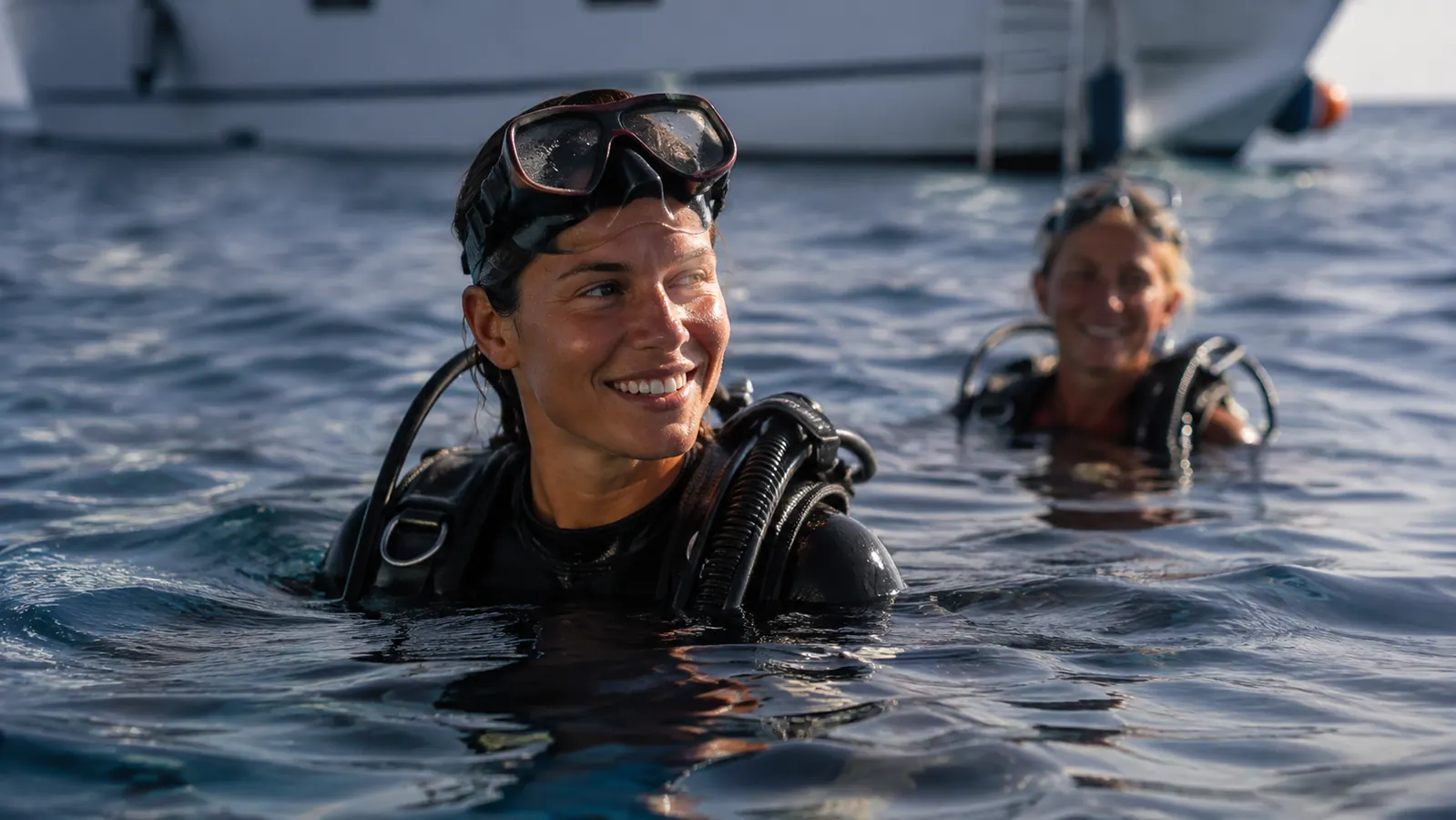
The honest first-day adjustment runs the opposite of what you expect. Underwater, back-inflation is the easy part. On the very first dive with the Patrol I hung flat over a shelf with my arms crossed, and I wrote it in my logbook so I could not talk myself out of it later: "flat all dive, no rib squeeze." The part that felt new was the surface. A jacket wraps the float around you, so you bob upright like a cork. A back-inflation BCD floats you lower, and on my first two surface intervals I kept lifting my chin to keep my mask clear of the chop. That is a real trade, and it takes about two dives to settle.
Underwater it is the opposite, and my second trip confirmed it. I rented a jacket for a single dive just to run the comparison again, and the old feelings came back on schedule: the feet drifting down when I looked at the bottom, the band across the ribs on the way up. Then I put the Patrol back on and floated flat with zero effort. Same tank, same water, same lead. I have run that A/B three times now, against two different rental fleets, and the pattern has held every time. That is what settled it for me. If you try back-inflation and the first dive feels strange on the surface, give it the second dive before you judge it, because underwater it comes together sooner than you think.
If you dive more than a few weekends a year, the back-inflation rig is the one.
The Cressi Patrol is the BCD I pack for every trip now. It trims horizontal, it leaves your chest alone, and the light travel build survives the way I treat luggage. Check today's price on Amazon and read what other divers say before you decide.
Amazon Check Today's Price on Amazon →The One Question That Decides It
Here is the question I ask anyone who corners me on a boat: when you dive, are you looking down and across, or is the jacket standing you up so you spend your time looking at gear instead of the reef? Be honest with yourself. Most divers who have only ever worn one BCD have no idea how much of their body position is the equipment and how much is them. The first time you hover flat, you will feel like somebody loosened a strap you did not know you were wearing.
Trim is the quiet part of diving nobody grades you on, but it is the difference between being a tourist in the water and being part of it. It is also gentler on the body, which matters more the older you get and the longer your working week is. I did not buy the Patrol to look the part on a dive boat. I bought it because my back spent six years paying for rented jackets, and after two years on the back-inflation rig, my back is a non-event on every trip.
Who Should Buy Which
Buy the Patrol, or a back-inflation BCD built the same way, if you dive regularly and you are done fighting the gear. You want flat hover for wrecks and walls, your ribs complain after deep dives, you travel with your own kit, or you are buying your first BCD after a decade of rentals and want to start where the divers who dive the most end up. That list describes me, and I have never once regretted the switch. For the longer version of that story, read my full two-year review of the Patrol.
Buy a jacket if you are new, if you dive a handful of times a year, if you spend long stretches bobbing upright on the surface, or if your chest has never once complained about the fit. And if you already own a jacket that you like, keep it. The best BCD is the one you will actually wear. Everything I have said assumes you have felt the thing a jacket does to your body on a long dive. If you have not, you may never need to switch, and that is a fine place to be.
If you are still on the fence, do what I did: rent a back-inflation BCD for a single vacation week before you buy anything. Most shops that carry them will set you up for a day or two, and one good week of A/B diving will tell you more than any review, including this one. One week of somebody else's rig is cheap tuition, and it keeps you from paying for a regretted buy. Ask your divemaster to watch your trim; that is the fastest honest read you can get. And once you own one, my neutral buoyancy guide will get you dialed in and floating flat in an afternoon.
The Patrol is the last BCD I plan to buy for a long time.
Two years, dozens of dives, salt water and truck beds, and the harness still trims true. If the design sounds like your kind of diving, check today's price on Amazon and see if the Patrol fits the way you actually dive.
Amazon Check Today's Price on Amazon →