
I was fifty yards off the reef, three tanks deep, when my old full-foot fin spun sideways on my heel, and I spent the swim home working twice as hard to go half as far. That dive convinced me, once and for all, that a fin is a tool, same as a chisel, and a tool that slips at the wrong moment is junk. The next season I switched to the Cressi Pro Light open-heel fins with real neoprene boots, and six years later they are still strapped to my feet for nearly every dive I do.
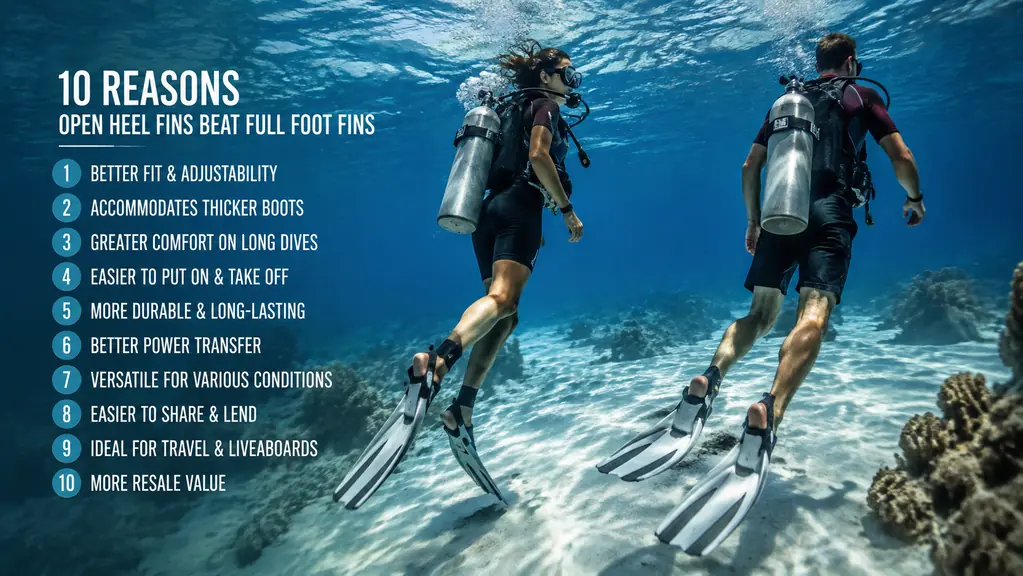
Full-foot fins are fine, and I will say that plainly up front. They are cheap, light, and a perfectly good thing to shake onto your feet for an hour of snorkeling off a warm beach. But the moment you add a tank, a wetsuit, a current, or a shore with rocks and cold water, they come up short, and there is a reason every dive boat on the planet racks open-heel fins instead. Here are ten of those reasons, in the order my legs noticed them.
The Pairs That Put an End to My Tiptoe
Six years in, the only thing I have replaced on my Cressi Pro Light pair is a strap. See today's price before you read the list, so these reasons mean something against a real pair in your hands.
Amazon Check Today's Price on Amazon →Ten Reasons Open Heel Beats Full Foot
Real Boots Go Underneath
A full-foot fin puts cold rubber against bare skin, and that is the whole problem. Open heel means a neoprene boot, and the boot changes everything. It traps a pocket of warm water against your foot, protects you from the ground, and fits the shape your foot takes when you kick. My feet go numb fast in water around seventy degrees, and boots were the difference between a twenty-five minute dive and a full hour.
The Fit Adjusts Instead of Guessing
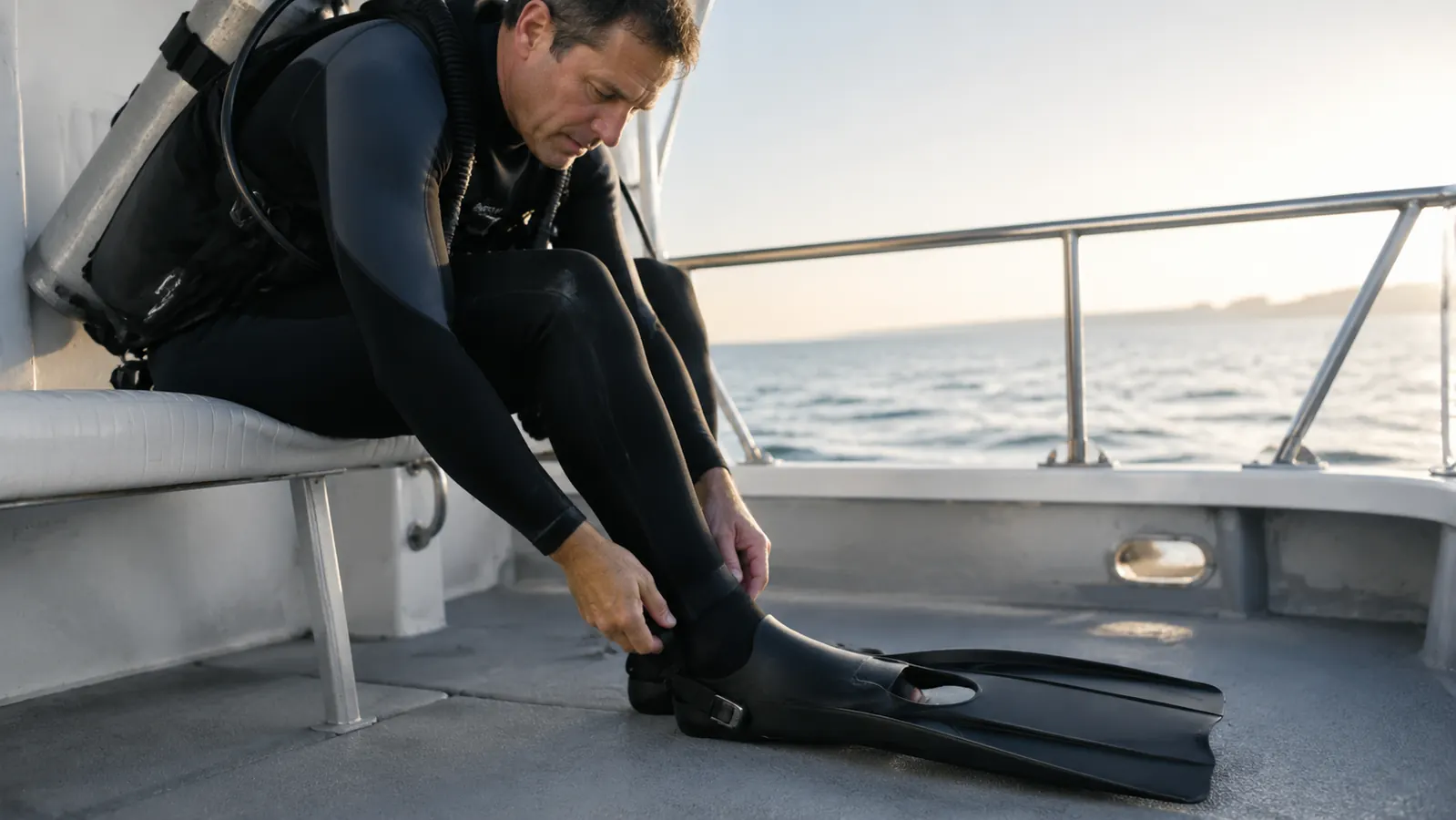
A full-foot fin is sized like a shoe, by a number that might match, and when it does not you get blisters or a fin that flaps at the heel. An open-heel fin cinches down with a strap, so you dial in the tension for whatever boot you are wearing that day, a thin 3mm in summer or a thick 5mm in spring, and the fin stays planted either way. Mine have ridden both.
Cold Water Stops Being a Wall
Warmth is why my season finally stretched past September. A full-foot fin leaves no room for insulation, so once the water drops you are done until next summer. With open heel I wear boots I already own, my feet stay warm, and I am diving in conditions that would have sent me home before. That is a month or two of extra dives, and I will take them.
The Heel Strap Keeps the Power in the Blade
A fin that slips on your heel wastes every kick. The force from your leg has to travel through the foot pocket into the blade, and if the fin is loose it rubs, rotates, and burns your ankle instead of moving you. An open-heel strap locks the blade square against your kick. You feel that the first time you push hard into a current and actually go, instead of going nowhere.
Your Shore Boots Are Your Dive Boots
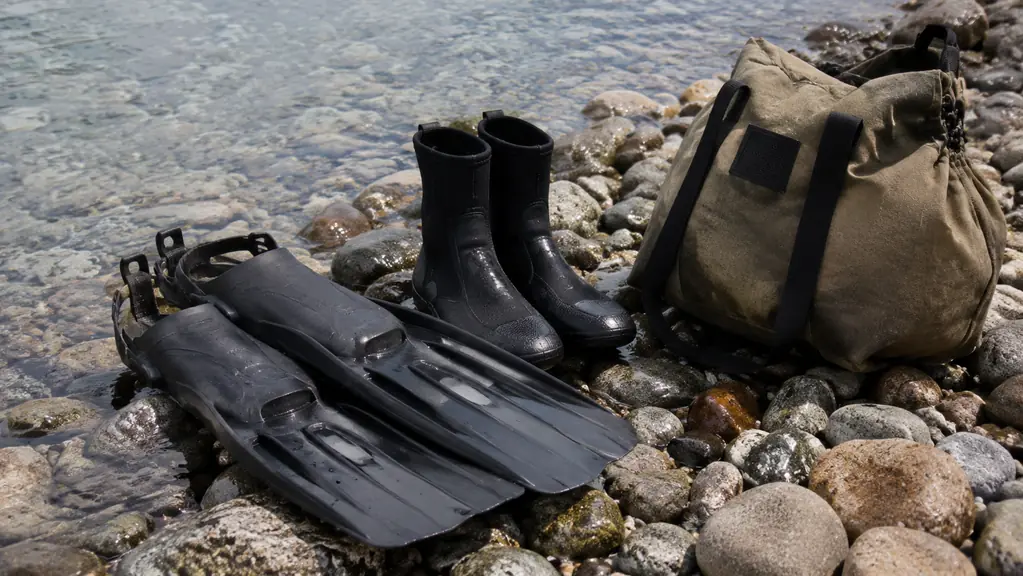
I do a lot of shore dives where you wade through sand and shuffle over cobble before the water gets deep enough to swim, and you want boots for that walk no matter what. With open heel, the boots you wear packing down the beach are the same boots your fins strap over. A full-foot fin leaves you choosing between bare feet and a pair of boots you then have to stash somewhere in the sand.
A Broken Strap Costs Next to Nothing
Rubber straps wear out, and mine finally let go after six years of kicking. I ordered a replacement set and it cost me less than a lunch stop on the way to the quarry. Try that with a full-foot fin: the pocket is molded into the blade, so when the rubber goes soft or the heel cracks, the whole fin is scrap. I only buy gear I can repair these days.
You Fit Any Rental Fleet on the Planet
Every dive operation I have ever used runs open-heel fins, because once a diver owns boots, one size of fin fits almost everyone. Bring your own open-heels and you fit right in. And if a trip's bag weight makes you leave the fins home, you can rent the fin and still use your own boots, which is easier to trust and cleaner than a stranger's foot pocket.
The Walk to the Water Stops Being a Performance
This is the tiptoe I opened with. With boots on, you cross boat decks, gravel ramps, and barnacle-crusted rocks like a person instead of a man on hot coals. Full-foot fins are built for bare feet, and bare feet have no business on a charter deck at six in the morning. Boots turn the whole chore into a normal walk, and that happens before the dive even starts.
They Still Fit When You Move to Thicker Suits
The day you step up to a 7mm wetsuit, or add neoprene socks for a drysuit, full-foot fins stop fitting, because the pocket is molded to a bare foot. Open heel carries the size in the strap, not in the rubber, so it cinches over whatever thickness you are wearing. Mine have ridden 3mm boots and 5mm boots, and they would take a thick sock tomorrow without a complaint.
You Buy a Blade, Not a Throwaway
Full-foot fins dominate the cheap end of the rack because one piece of molded rubber costs next to nothing to make, no straps, no hardware. That is attractive until the pocket goes soft and the fin loses its spring. Open-heel fins like the Cressi Pro Light are built like hand tools, made in Italy and meant to be kicked for years and repaired when something gives. That is exactly why I still own mine.
What I'd Skip
Honest means honest, so here is the other side. If all you do is snorkel in warm water a couple of times a year, keep the full-foot fins. They pack flat, weigh nothing, and slip into a corner of your bag where boots never will. And if you only dive out of tropical resorts where the boat drops you onto sand and you never walk on anything sharper than a beach towel, bare feet have a point. But the moment you dive from a charter boat, in cold water, or from any shore with rocks, boots win, and open heel wins with them. Full-foot fins are snorkel gear. Open-heel fins are dive gear, and that distinction is real, not snobbery.
The day my full-foot fin spun sideways on my heel three tanks deep, I started shopping. Three dives in the Cressi Pro Light and I knew I would never go back.
None of this is a hard sell, because you do not need me to talk you into a warm, dry foot. It is the same arithmetic a working life has taught me: buy the tool that fits the work, that can be repaired, and that you will still want in six years. That is what open heel buys you, and it is why my Cressi Pro Light pair is still in my dive bag while the full-foot pair sits in the back of a closet waiting for the beach.
Stop Borrowing Fins That Fit Strangers
Open heel with good boots costs about what a decent pair of full-foot fins does, and mine have run six years without a complaint. I put the whole long-term story into the Pro Light review, and the blade-versus-split argument into the comparison, if you want the longer version before you order.
Amazon Check Today's Price on Amazon →