
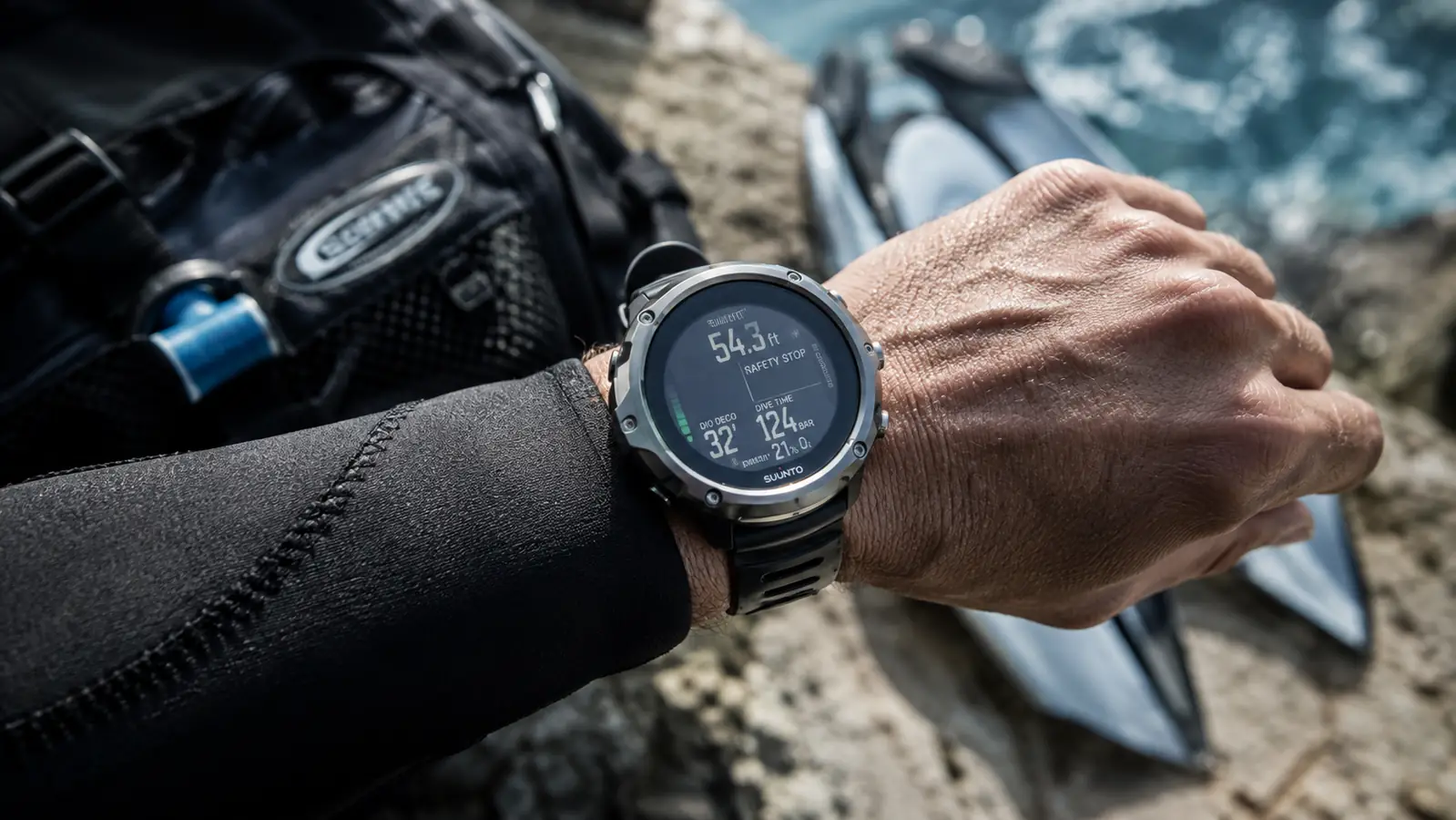
Walk into any dive shop in the country and the Suunto D5 is the computer watching you from the counter, screen lit up like a truck dash, with a friendly kid telling you it's the only one worth buying. I've owned that computer. I've also owned the Cressi Leonardo 2.0, the one that's spent a decade strapped to rental wrists and just keeps working. I fit crown molding for a living and I buy dive gear the way I buy a router: pretty doesn't hold an edge, sharp does. This comparison is not from a spec sheet. It's from 41 dives across two summers with both computers on the same wrist in the same cold water. Plain words, no salesman.
The short answer, before I get into the weeds: a recreational diver who does a season of quarry dives and a week of boat dives will not outgrow the Cressi. It runs a healthy margin under the D5 at today's price, and it covers every dive mode a cold-water hobby diver actually uses. The D5 brings a color screen, a built-in compass, and a phone app. The Leonardo brings a giant plain screen, a battery you change at the kitchen table, and no app at all. One is a gadget, the other is a tool. I've covered the long-term review here and the dive-planning basics here. First, the side-by-side.
| Cressi Leonardo 2.0 | Suunto D5 | |
|---|---|---|
| Price | A fraction of the D5 at today's price; leaves real money for trips | Roughly two to three times the Leonardo's current price |
| Screen | Huge monochrome digits, readable at the murkiest depth | Color display, crisp and modern, smaller numbers |
| Battery | User-replaceable CR2450 coin cell, about two years between changes | Rechargeable, cable every three or four weekends of diving |
| Learning curve | Two buttons, taught in one surface interval | Three buttons, menus and an app, took me a few dives |
| Connectivity | None built in. Optional PC cable for a logbook export | Bluetooth to the Suunto app, firmware updates over the phone |
| Compass | None. I carry a wrist compass | Tilt-compensated digital compass built into the case |
| Nitrox range | Adjustable from 21 to 50 percent | Handles mixes up to 100 percent with full deco planning |
| Button feel | Stiff for the first dozen dives, then broken in fine | Smooth and immediate from day one |
| Weight on the wrist | Lighter, easy to forget it is there | Heavier, sits like a smartwatch |
| Warranty | Two years from Cressi | Two years from Suunto |
| What it is | A dive tool with one job | A sports watch that also dives |
How I Tested Both
This wasn't a controlled lab test with clipboards and a stopwatch. I wore the Suunto D5 for a season of cold-water dives off Lake Huron, then moved the Cressi Leonardo onto the same wrist for the same wrecks and the same flooded quarry, same 7mm suit, same 32 percent nitrox. That's the only honest way to compare two computers: same depth, same water, same man pushing the buttons. Over two summers I logged 41 dives between them, from 30-foot training dives to a 95-foot descent through the wheelhouse of a sunken freighter. Every dive had the same checklist. Set the mix, watch the NDL count down on the way down, and read the screen without reaching for reading glasses.
I also did the things the brochure never mentions. I left both computers in a hot truck for an afternoon, the way you do on a shore-dive day. I rinsed them in the shower after every dive, the way I do every piece of gear I own. I let both sit for three months over winter and checked in the spring whether each one was ready the second I grabbed it. That last test is the one that matters to a man who dives maybe 25 days a year and needs his gear to be ready on the first morning of the season, not after an hour of fiddling. The winter bench test is where a computer proves whether it belongs in your kit or on a shelf, and only one of the two woke up without drama.
Where the Cressi Leonardo Wins
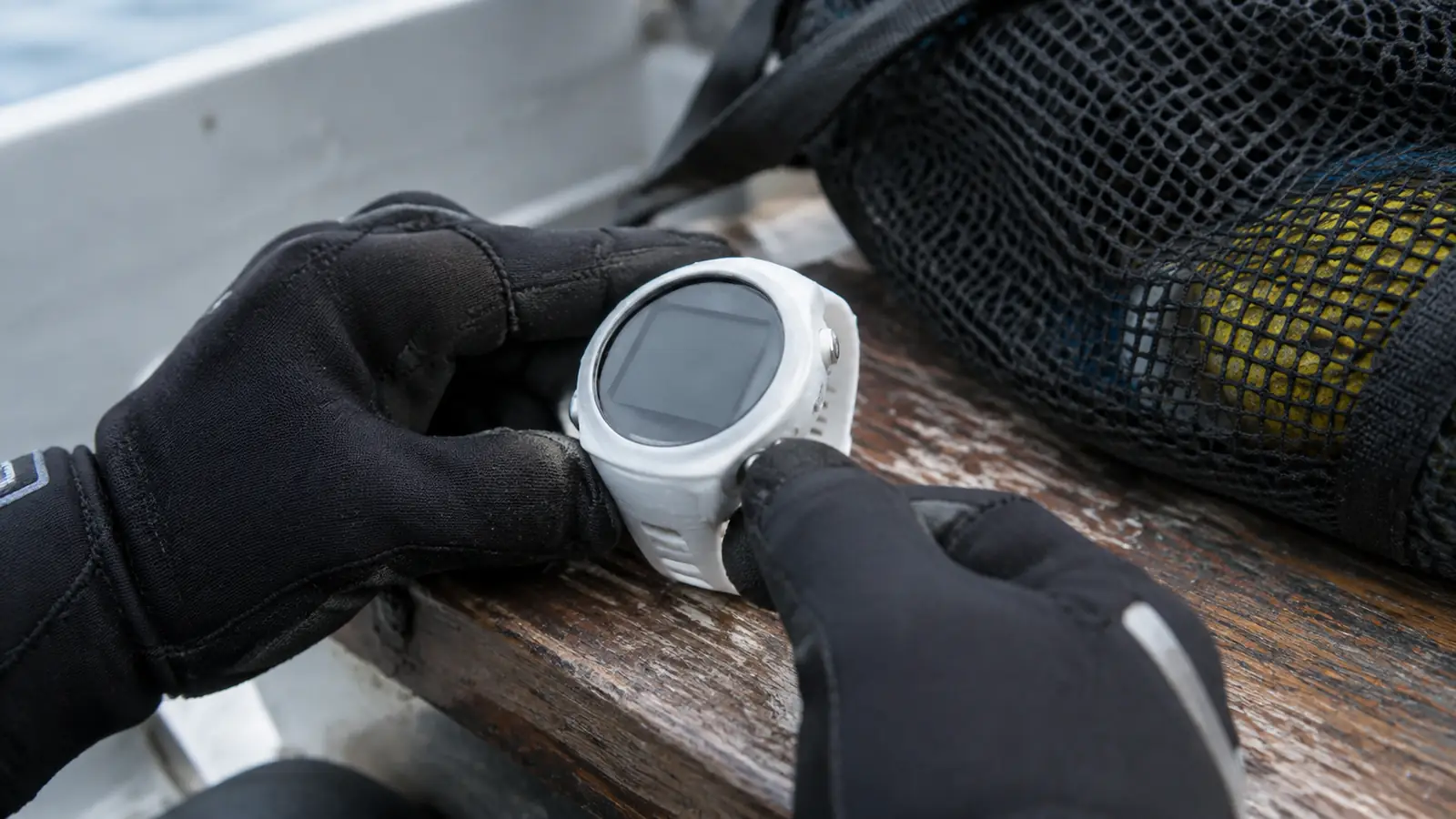
Price, and it's not close. Nobody needs me to do the math; one is a fraction of the other at current price, and the real story is what that difference buys you. The Leonardo gives you three things the D5 charges a premium for in spirit: a bigger, simpler screen; a battery that never needs a wall charger; and a two-button layout you can learn on the boat ride out. The display is the largest I've used in a dive computer, plain black digits on a light face, no clutter. When the vis closes in at 90 feet and the light is going, that plain face is the one my eyes trust at my age.
The battery is the craftsman's argument, and it's the one that decides this for most people like me. The Leonardo runs on a CR2450 coin cell you can buy at any drugstore and swap in about a minute, no tools. I changed mine once in two years, sitting at the kitchen table. The D5 needed charging like a phone, cable and wall outlet, every three or four weekends of diving, and on a liveaboard that means remembering a charger and hoping the boat has power. The Leonardo doesn't think about power at all. It is the difference between a tool and a toy, and I have tools in my shop older than the people selling them.
Then there's the simplicity that never shows up on a spec sheet. Two buttons do everything, and I mean everything: mix, log, battery, all without a manual in your lap. Nobody has ever asked me what the flashing symbol means on the Leonardo, which is more than I can say for every menu-driven computer I've owned. For a man who likes his tools, fewer moving parts and fewer menus is a feature, not a compromise.
Where the Suunto D5 Wins
The D5 is the better computer by the spec sheet, and I won't pretend otherwise. The color screen is genuinely lovely, laying out nitrogen load, depth, and time in a way the Leonardo can't, and seeing your whole dive profile in color instead of squinting at digits is a real joy. The tilt-compensated compass built into the case saved me from bolting a separate compass to my wrist strap, and I used it more than I expected. Bluetooth to the Suunto app turns logbook export and firmware updates into a phone job, replacing the laptop ritual the Leonardo still needs.
The D5 also goes beyond diving. It tracks steps and activity and works as an everyday watch you can wear out to dinner, which is a real feature, not a brochure word. The screen wakes to a glance, the menus are laid out like a proper smartwatch, and if you want your dive log living on your phone, the D5 delivers that with zero effort. If a computer that doubles as your daily timepiece and puts your dives on your phone is worth the current price premium to you, the D5 is a good place to spend it. I enjoyed mine. I just didn't need it, and that is the whole honest point of this comparison. Polish has a price, and for the diver who wants the polish, this is where the money goes.
I'll go one step further, because honesty cuts both ways. If I were twenty years younger and on a liveaboard every other month, I'd probably wear the D5 daily and never take it off. It is the better object in the hardware sense: nicer materials, a screen you want to look at, firmware updates over the air. The Leonardo earns its place by being the better tool for the dives I actually do, not the better gadget in the drawer.
Skip the charger. Get the computer that just works.
After 41 dives on both, the Leonardo did everything a cold-water recreational diver needs, at a fraction of the D5's current price. If you want a dive computer that's ready the first morning of the season, this is the one.
Amazon Check Today's Price on Amazon →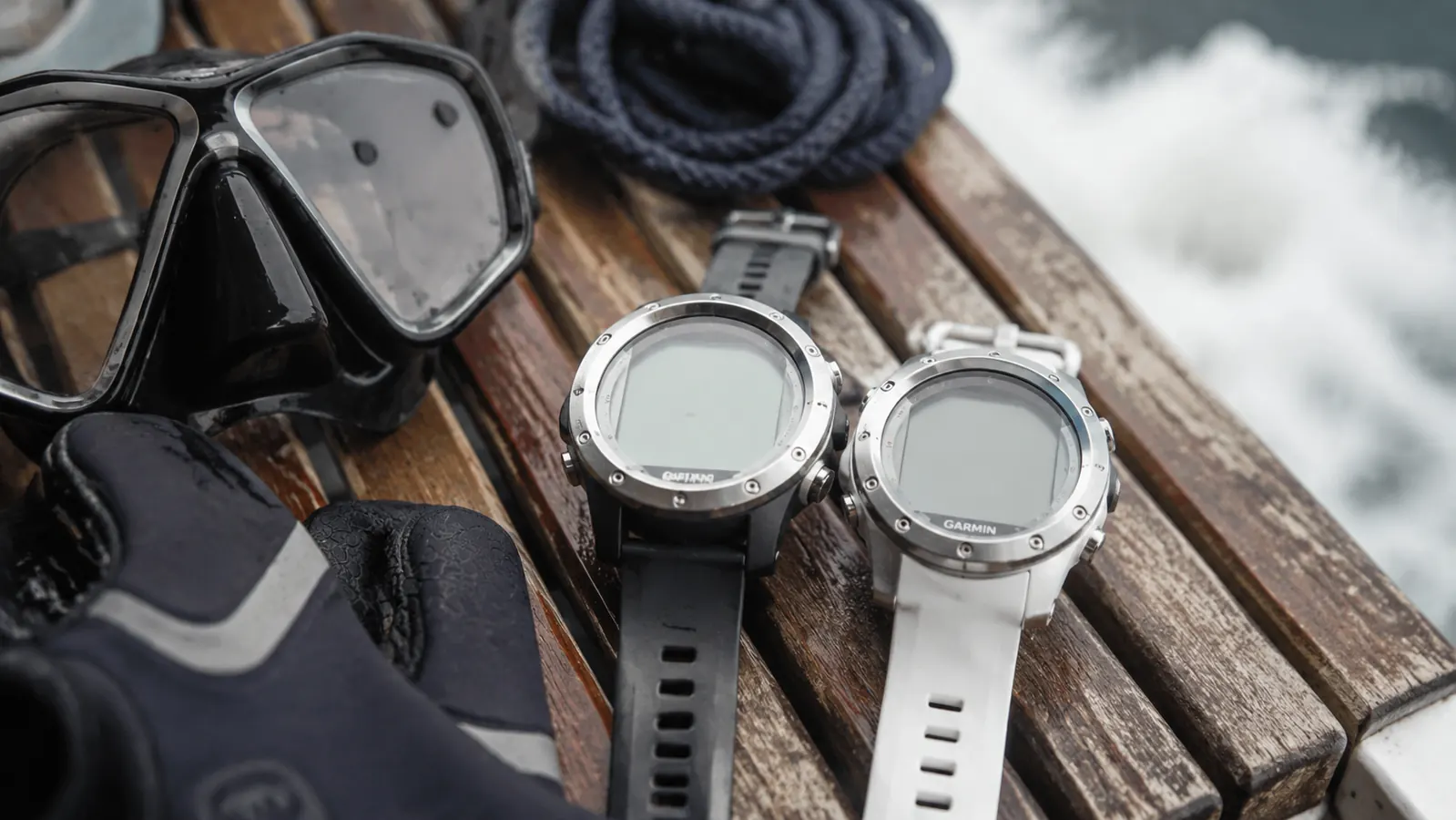
What Both of Them Do the Same
Here's the part the marketing skips. Both computers track your nitrogen with the same family of RGBM algorithm, both plan your stops, both keep a logbook, both handle air and nitrox without extra gear, and both get you to the surface out of deco if you watch the numbers. When it comes to the one thing a dive computer actually does, keep you safe on the way up, there isn't a meaningful difference between them. The D5 does not keep you safer than the Cressi. No salesman is going to stand there and tell you that part.
That's why I can stay relaxed about the whole argument. You're not choosing between a safe computer and an unsafe one. You're choosing between a plain tool and a polished one. I own both kinds in my shop. The plain ones do the work every morning, and the polished ones sit on the bench until somebody admires them. You can guess which ones I reach for when the work actually needs doing.
And both will outlast this argument, whichever side you land on. These are durable pieces, built for salt water and boat decks. Ten years from now the one you bought will still be tracking your dives. This was never a question of which one lasts. It was always a question of which one you'll actually enjoy diving with.
I changed the Leonardo battery once in two years, sitting at the kitchen table. The D5 I had to remember a charger for, every three or four weekends, like a phone.
What I'd Change About the Leonardo
Honest comparison means telling you what the Cressi doesn't have, not just what the D5 has. I missed the compass, and while I carried a wrist compass anyway so it was no hardship, a built-in one would have been nice. I also missed having the dive profile on my phone the way the D5 delivered it. With the Leonardo, I hook up the optional PC cable at the kitchen table if I want the logbook on a screen bigger than my wrist, and that's a chore I only do at season's end. And the buttons are stiff out of the box, the way a new pair of work boots is stiff. A few dives later they're broken in fine. None of these are reasons to spend extra money, but they're the honest account of where the Cressi cuts corners to hit its price.
The stiff buttons are the only complaint that genuinely bothered me, and only for the first dozen dives. After that they settled in. Everything else on my list I solved for pocket change at the hardware store: a compass I already owned and a PC cable. You will not solve the D5's need for a charger with anything from a hardware store, and on a liveaboard deck that matters more than you'd guess.
Who Should Buy Which
Buy the Cressi Leonardo 2.0 if you are the recreational diver most of us are. You want big digits you can read without glasses, a battery that doesn't need a wall outlet, a layout you understand by the second dive, and the most computer for the least money. You dive a week of vacation a year plus your home waters, you run standard nitrox mixes up to 50 percent, and you want equipment that's ready when you are. The rental racks are full of Leonardos for a reason, and half the divers I know quietly bought one the season after they borrowed one.
Buy the Suunto D5 if the color screen and the app are things you know you'll use, if you want a compass without a separate instrument on your wrist, or if you want one device that's your dive computer in the water and your everyday watch on land. Buy it if you enjoy the technology for its own sake. Just buy it with your eyes open. You're paying a serious premium for polish, not for safety. Both computers track nitrogen and keep you out of deco. Neither makes you a better diver. If the tech pleasure is worth it to you, the D5 is a fine instrument. More power to you.
The honest bottom line after 41 dives: the extra money buys toys, and there's nothing wrong with toys if you want them, but the diving itself is the same. My recommendation for the cold-water recreational diver is the Leonardo. It does the job every dive, holds up in salt, leaves money for the trips, and is ready the first morning of the season without a thought about charging. That's how a carpenter buys a tool, and I'd stand by it at any kitchen table.
My recommendation: the Leonardo, unless you want the toys.
I had both computers on my wrist across two summers. I kept the Cressi. At today's price it runs a fraction of the D5's cost, does everything a recreational cold-water diver needs, and is still in one piece at season's end.
Amazon Check Today's Price on Amazon →