
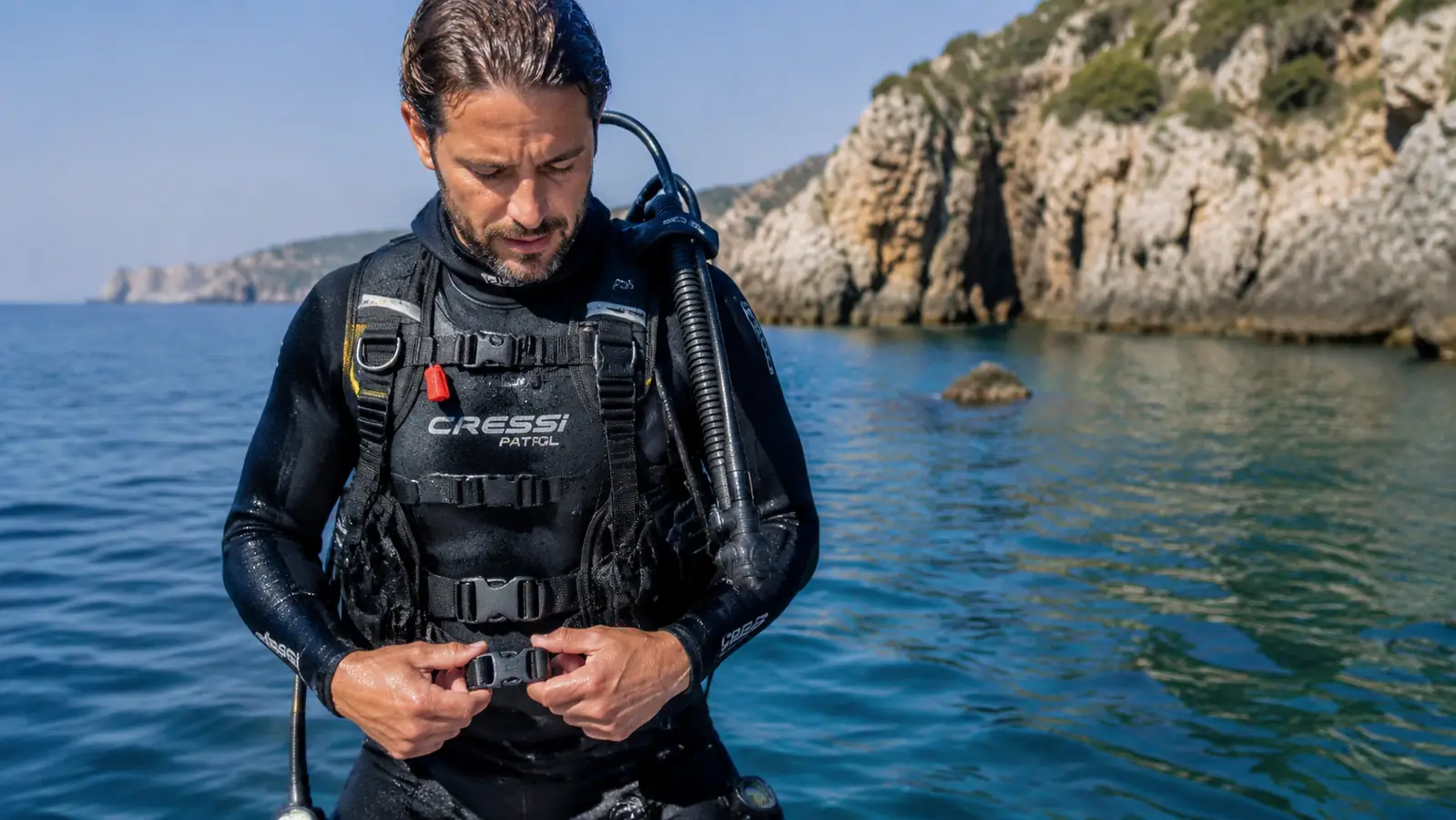
I read the Cressi Patrol page the same way I read any big purchase before I hand over money: twice, and hunting between the lines. The listing sells a back-inflation wing that is light, folds small, and trims flat, and every one of those claims has turned out to be true in the water. What the listing does not tell you, and what straight-on product photos cannot show, is that the shoulder area runs close to the body. Close enough that the fit becomes the first thing I notice about the rig. And out of one hundred and seventy-seven reviews, I did not find a single one that warns you before the box arrives at your door.
I have run this Patrol for the better part of two seasons, most of it in a quarry north of the shop and a solid week on a warm reef. The review I give from my gear bench is different from the one the listing gives. This one is mine. The shoulders. The way the weight pack presses on your hip bone until you learn to seat the straps. The surface surprise that catches every jacket diver, because a back-inflation wing floats you like a raft and not a chair. And the divers I would point toward a good jacket instead, without a second thought. If you take one idea off this page, make it the sizing advice, because a wrong fit is the one way I know to end up annoyed at an otherwise excellent wing.
The Quick Verdict
A light, accurate back-inflation wing at a travel price, with a shoulder fit that runs close and a learning curve for anyone coming off a jacket. Sized right, a decade of gear.
Amazon Check Today's Price →The one question the spec sheet never answers
When you inflate the wing, where does the air go? The Patrol sends it behind your shoulders instead of wrapping it around your ribs. That one decision is the whole difference between this and the jacket you are used to. The only thing left to get right is the size, and this review is all about it. Read the fit notes below, then check today's price in the same window as your size.
Amazon Check Today's Price on Amazon →How I've Used It, and the Man Behind the Fit Talk
Two years and change with this wing, and my logbook sits at forty-one dives with a few boat days that never made the page. That is an honest count, not a rounded-up one. Most of it is a quarry a few hours from the shop, where the visibility runs about twenty feet and the water stays cold until July. A thread of lake dives in the spring, and one week on a reef south of the border where the skipper did the miles and the wing did the rest. Always a single tank, steel in the quarry and aluminum when I fly. I go through all this because a buoyancy rig that covers both jobs, the cold murky Saturday and the long blue boat day, is a piece of equipment that has truly been tested, not just polished for the catalog. I mention my own habits only so the record is clean and repeatable. The same 7mm suit comes off the shelf every weekend, the same fins, the same steel 80, so the only real change between one Saturday and the next is the water itself. When a piece of gear misbehaves I can blame it fairly, and when I dive poorly I can blame the hand on the valve. It keeps a review honest, and it is how I know the difference after two years.
Ground the fit talk in a number so it means something. I take a medium in Cressi and most of the brands that build for the same bodies, a thin chest and shoulders that have never given me much trouble, and my chest measurement sits right at the top of the medium range. Everything that follows, adjust for your own build. A heavier man, a barrel chest, or a diver who stacks a thick underlayer for cold water will feel more of it. A smaller frame will feel less. That baseline matters, because the whole review turns on the shoulders and you deserve to know whose shoulders I am measuring.
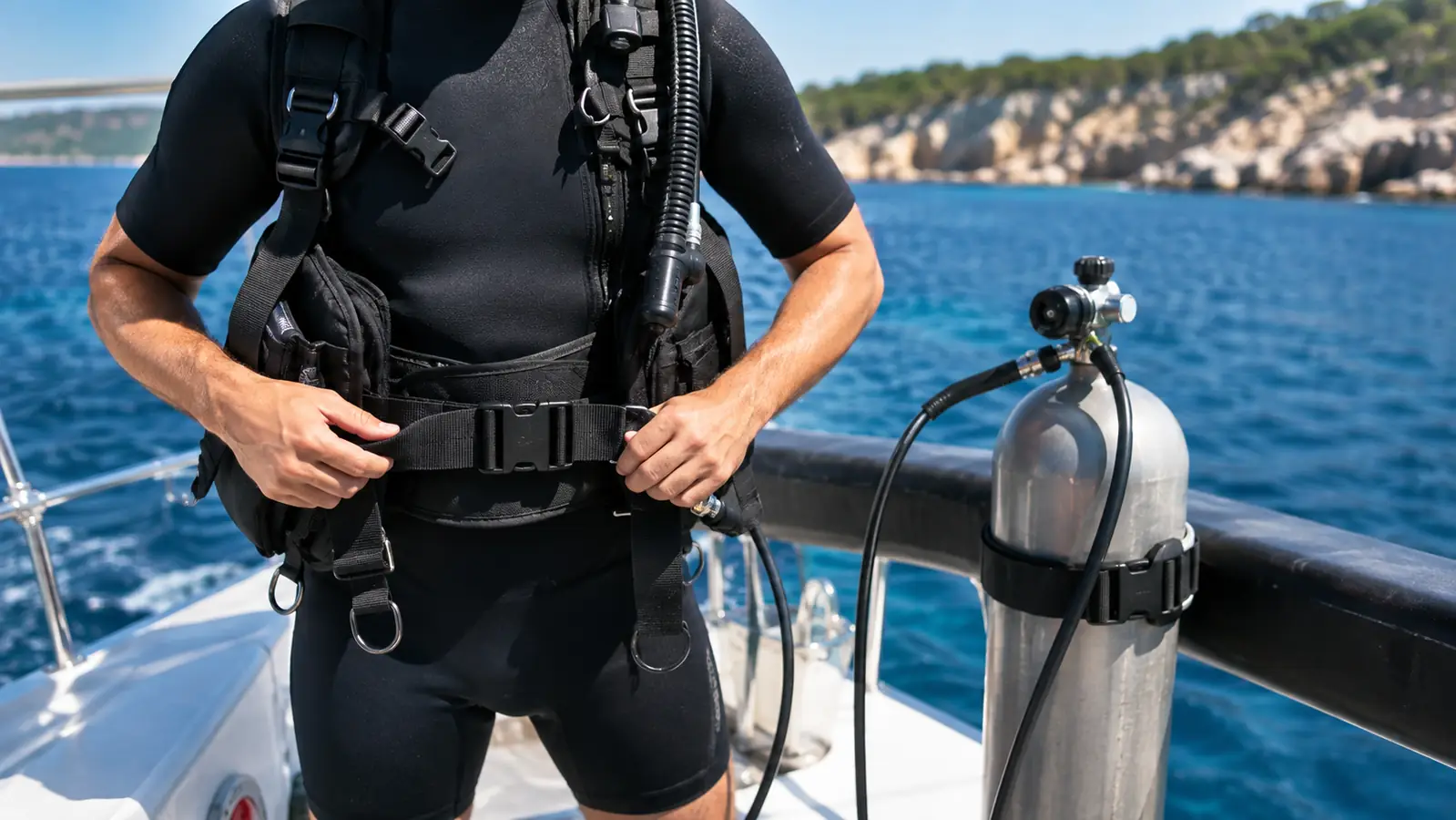
What the Spec Sheet Doesn't Tell You About the Shoulders
A back-inflation wing hangs on a soft, low-profile back panel that carries the harness, and to hold the pack tight when the air goes in, Cressi pulled the straps in close around the shoulders. That geometry is exactly how you get the flat, level trim the Patrol is known for. It is also the thing the catalog shots never show you. Compared to an average jacket style, the straps run closer to your neck and deeper under the arm, with far less room to spare. The first time you hop into it, you know you are carrying a harness built for a purpose, not a comfortable vest with an air bladder inside.
The fit came up on me slowly, not on the first day. For the opening couple of outings, nothing. Only somewhere past the tenth dive did I catch my left shoulder lifting a little every time I reached behind for the dump valve, a small shift so the strap would not worry my collar. Never pain, never a real restriction, just always there. That is why the sizing advice you come across is one piece of forum wisdom with real legs. If you sit between sizes, or you feel the shoulder pressure on that first fit, order a size up. A tape measure on the chest is worth more than the letter printed on an old t-shirt, and one size can be the entire difference between a wing you forget about and one you feel all day.
The First Weeks: the Weight Pack and the Details the Reviews Skip
The built-in weight pockets sit where the sellers say, at hip level on both sides, and once you come to terms with them they are among the best features of the wing. The first three dives they get feisty, though. With a reasonable load per side, the pockets want to shift forward over your hip bone while you walk the gunwale or exit a shore dive. It settles with one habit worth learning. Load the pockets while you stand, seat the belt, and once the wing is in place make a small adjustment so the harness sits above the pouches. Run a pound lighter on each side and check your trim. After two afternoons the whole routine is as natural as pulling on your fin boots.
The pockets themselves are honest work. Each side is deep enough for a spare mask and a real spool, the zippers have held up in two seasons of salt, and a small drain at the bottom lets the water run out the moment you open the pocket, so nothing sits and stiffens overnight. Taken one by one, these little details tell you Cressi builds this wing for the rental fleets that get handed to a thousand strangers a year. That standard of abuse is exactly the strength a private owner inherits for the same price, and it is the part the pictures never show.
Where the Patrol Flat-Out Earns Its Place
Here is the claim that holds up best on the page, and it is the one that matters most. The lift is behind you, not wrapped around your chest. A jacket makes the cell around your body, and with every full breath it wants to roll you slightly toward your back and tip your chin up, which is why a dive spent in a jacket is a long session of small corrections. The Patrol holds all its air on your back, the body trims level, head and hips in a line, and your face is free to look down at the reef. Two weekends ago I hovered over a small spread of stones in the quarry and, for a full minute, never changed a thing. No jacket I ever used off a rental rack could do that.
It is also a true travel piece. Folded flat, it takes no more space than a wool sweater in a duffel, and on my last two trips it rode in the same soft bag as my clothes without pushing me past the airline weight the way a jacket wing would. After a day of diving, the closeout is a ten minute rinse, a flat hang with the dumps open, and by the next weekend the wing is dry and ready. I own tools that have lasted me twenty years because I take care of them the day I use them, and this wing answers to the same kind of habit. Cared for that way, it shows no wear season after season.
On the nineteenth dive I drifted flat above the quarry bottom for a full minute, watching the line below, and I never once blew, dumped, or nudged the wing. When the gear falls out of your attention, that is the whole review.
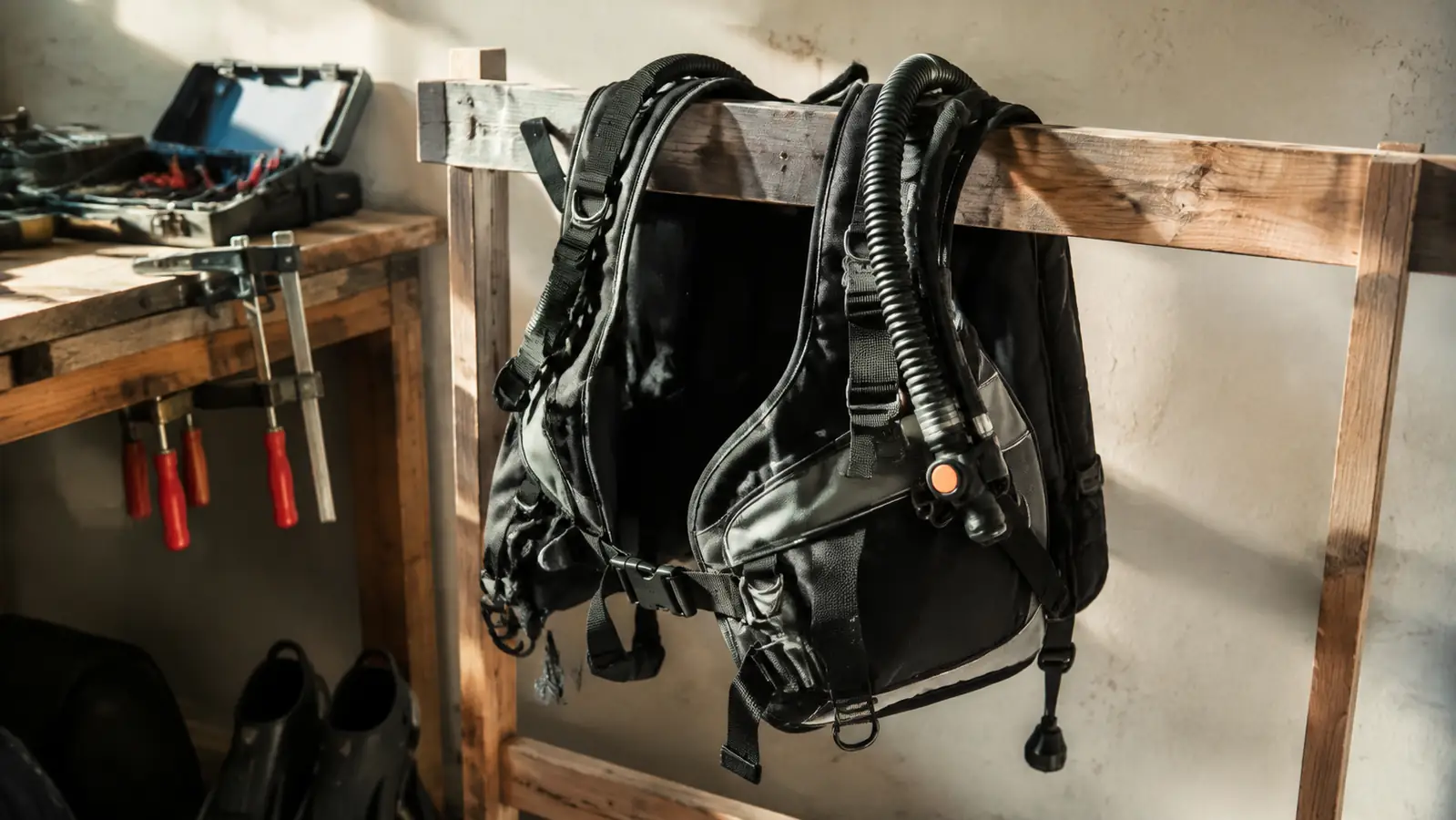
The Raft and the Chair: Surface Truth Nobody Writes About
Here is the fact no rating or glowing line puts into its own words: a jacket floats you upright at the surface, the generous cell holding you up like a lounge chair at the edge of the dock. A back-inflation wing keeps the same volume behind you, so the rig wants to lie flat like a raft on a still pond, its face down toward the water, and it will not build a porch for you. To hold a vertical hang and carry a conversation while you wait for the boat, you have to find the backward tilt or a deliberate roll. That is not a defect; it is the direct result of a buoyancy system that balances behind the body, and it is the one thing the sellers do not put on the box.
If you are coming off a jacket like most divers, an hour in a pool smooths the change. Twenty minutes of floating level, a slow roll in each direction, and a couple of surface rest stops take the surprise out of the first open-water dive. The first few dives will feel like breaking in a new pair of boots, and then one day the equilibrium becomes yours. The wing does its best work underwater, where flat is the whole point to begin with, and the only place it asks you to learn a new trick is this short stretch at the surface. An hour of practice is a small price for a better line on the reef. I will add the comparison that settled it for me. I keep a jacket-style harness in the truck for the dives where the surface is the afternoon, and the Patrol sits behind it for the dives where the point is the reef. Two tools, two jobs, and choosing between them is the part no review can decide for you. Owning both has taught me more about the Patrol than any single season could, because it lets me see, in the same week, exactly what each one is good at.
The Honest Nits, Before We Get to the Columns
Before the pros and the cons, one paragraph to set the table. I spent half a season swapping the Patrol against the best of the jacket-style harnesses on the local rack, and the split was clean: the Patrol took the trim and the travel, the jackets took the easy shoulder and the upright float. None of my verdicts comes from a spec sheet. They come from trading back and forth in the same water, the same week, until the personality of each proves itself. The four nits below, the close shoulders, the weight-pack learning, the raft at the surface, and the heavier underlayer, are the honest edges of that trading. None of them is a reason to pass on the Patrol once it fits, but all of them matter more than the words on the box.
What I Liked
- Trims level and flat, the lift behind your shoulders and not wrapped around your chest
- Travels the way it is sold, folding small enough for real luggage
- Pockets are a true working size, with room for a mask and a spool
- The integrated weight system, once seated, is dependable and quiet
- Saltwater care is a rinse and a flat hang, ready again next weekend
Where It Falls Short
- The shoulders run close to the body, and ordering up is half the decision
- The weight pockets drift forward for the first few dives
- On the surface you ride a raft, not a chair, until you learn the roll
- The close harness leaves little room for your heaviest underlayer
Who This Is For
Write this for the diver with an honest logbook and a few years of water under the belt. If a quarry weekend is your home week, if you fly once or twice a year, and you are done borrowing gear that has been dried into the shape of a hundred strangers, the Patrol in the size that respects your shoulders is a clean landing. It is not a learner's jacket. It is the wing for the diver who wants an honest, travel-light, well-made piece that fits the shape of a body and stays out of the way while he looks under the reef. After two seasons, that is the recommendation I sign. One honest closing note: this is the wing I keep reaching for, and I have stopped renting entirely. That is not a sloganeer telling you, it is a man who runs his hobby the way he runs his shop, with tools that earn their place on the bench. Let the size be the only thing you negotiate, give the wing a season, and I suspect you will find the same quiet verdict.
Who Should Skip It
Skip it if you carry width through the chest and shoulders and a size up does not ease the seam. The harness is cut for mobility, and a set of shoulders bigger than its range will feel the strap even in the larger letters. Skip it if your diving is mostly the surface hour, the calm float where the jacket makes a chair out of you and the conversation is the day, because this wing does not build you a sunroom. And skip it if you are still in your first couple of seasons and unsure whether diving will keep you, because the rented seat is still the cheaper way to find out, and a good wing will be waiting whenever you are sure.
Sized right, this can be the last wing you buy
The Patrol is the straight shooter a carpenter likes: honest, quiet, built to last. The one part left to you is the size. Measure the chest, step up a size when you sit between, check today's price, and the rental habit loses its pull over you for good.
Amazon Check Today's Price on Amazon →