
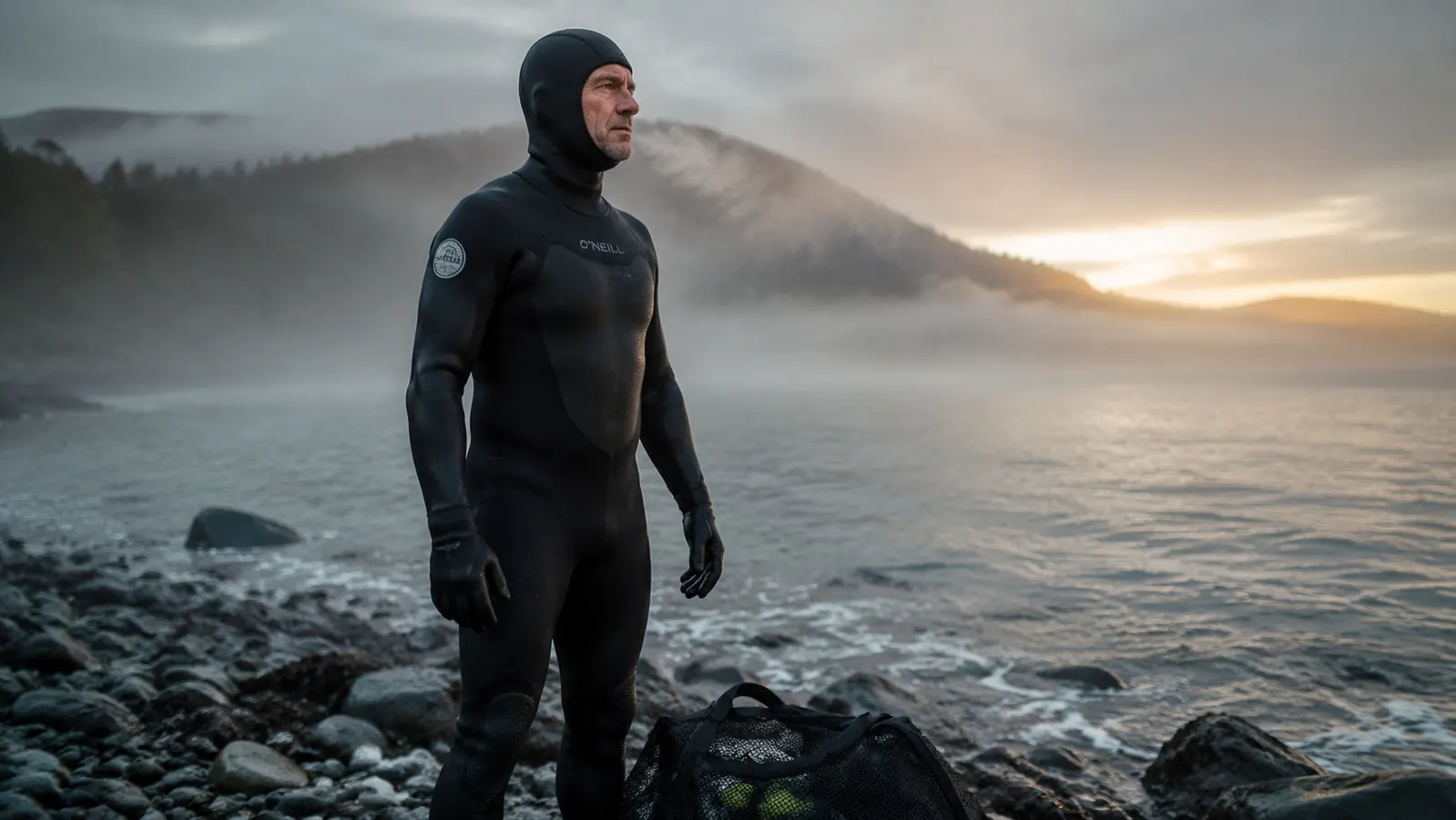
I read fifty degrees on the quarry thermometer and recalibrated my whole dive plan in one sentence: the old 5mm would be warm for the first twenty minutes and then slowly rent my heat right back out to the water. Twelve dives a year I cut short because the second half of the day was a shiver I didn't want to pay for. I'm a carpenter, thirty years into the trade, and I don't accept a tool that abandons the final third of the job. That's why I stepped up to a 7mm suit this season, and the suit that took my whole year's diving is the Mares M-Flex 7mm.
Full disclosure before the verdict: I bought the M-Flex with my own money and treated it like the rest of my kit. I rinsed it after every dive, hung it in the shade, and logged no favor from the brand. They don't know me from anyone on the dock. What follows is the plain account of 84 dives, two cold seasons, and the honest judgment at the end of them.
The Quick Verdict
The M-Flex 7mm does the only job a cold-water suit is hired to do: it keeps the warm on my side of the neoprene long enough to fish the whole dive. It is not a drysuit, and it is not a summer toy, but it is the best honest 7mm I've put my shoulders into.
Amazon Check Today's Price →The 7mm That Ended My Cold-Water Countdown
If your dive plan writes itself from the twentieth minute, this is the fix. See what the Mares M-Flex 7mm goes for on Amazon today and put a real season back on your calendar.
Amazon Check Today's Price on Amazon →How I've Used It
Eighty-four dives across two cold seasons, the first starting March 2nd and running through June, the second on the exact same calendar a year later. That's the whole base line. Every one of those gets a line in the same kind of log I keep on a jobsite: date, surface water temp, deeps depth, bottom time, and one honest sentence about how the cold acted on the surface interval. Supply the figures and the truth shows up in the end numbers. A wetsuit season is no different than an as-built bill.
The variety is what matters more than the count. Quarry dives off a stony ledge where the knee panels took a real beating, shore entries off the breakwater in a swell, and the calm boat runs out to the islands. Each kind of water attacks a suit differently. The ledge chews the knees, the sand finds the zipper, and the sun on the boat deck tees up the shoulders if you don't get the thing on a hanger fast. Every one of them had their shot at the Mares by June.
And the number that decided everything: zero. Zero cold-outs in 84 dives across two seasons, zero days sitting on the boat knowing the next dive wasn't worth climbing in for. The countdown the old suit played in my head, the one that starts around the twentieth minute and gets to the surface before I do, went quiet and stayed quiet. That single change is what made two Maine cold seasons worth living through.
Getting In and Getting Out: The Price of 7mm
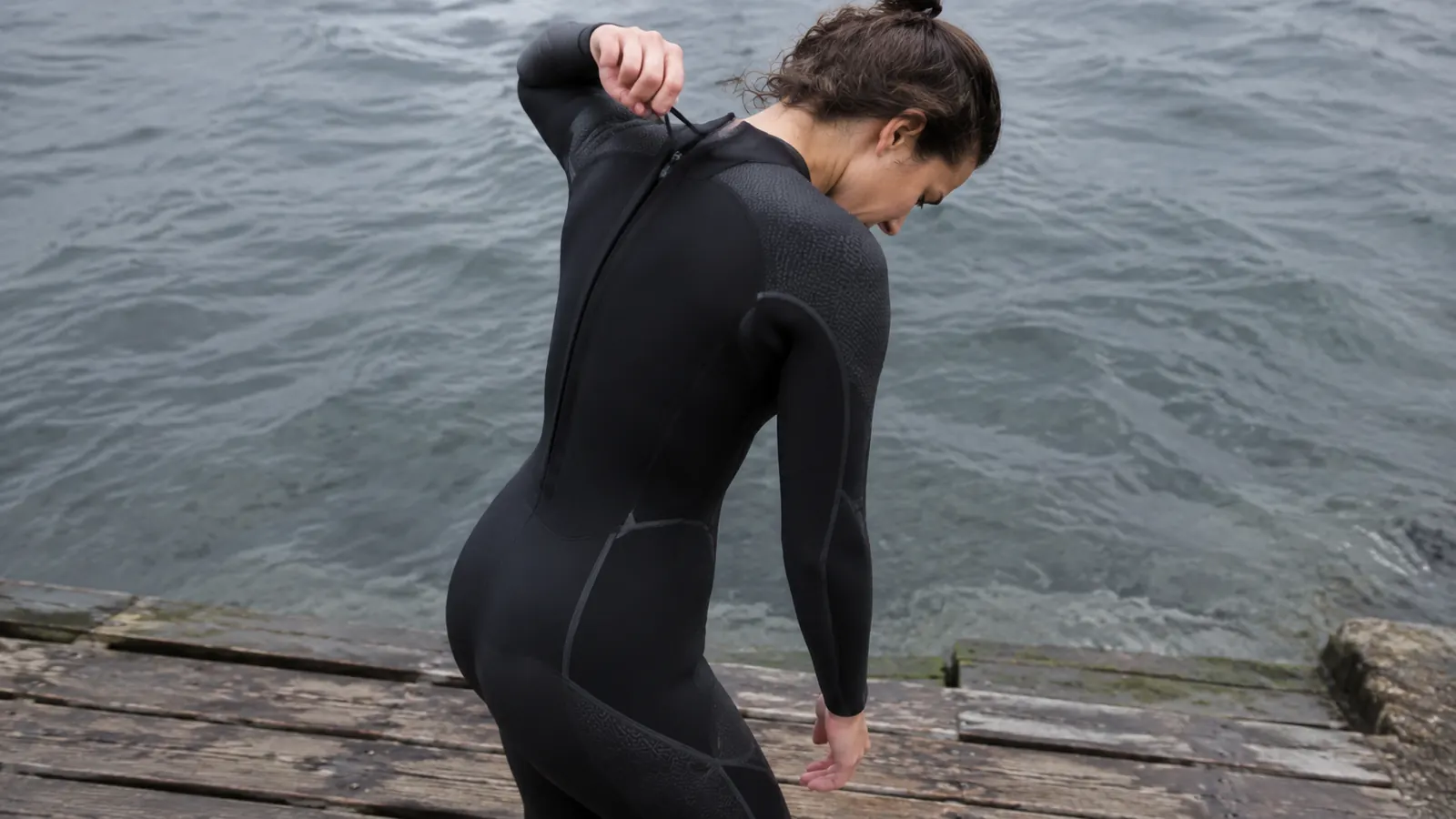
A one-piece 7mm is a different animal in the fitting room. The rubber is thick enough to hold its own shape, and it will not slide on the way a 3mm does. The first morning with the M-Flex I spent a good five minutes stubborn at the shoulder before I learned the trick of it, and if that happens to you it's normal, not a problem with the suit. All thick neoprene starts out feeling like it was cut small on purpose.
The order that beats it: one leg at a time, calf rolled so the foot passes clean, seat the heel, pull the neoprene up over the knee. Then the second leg. Then the arms, and only then the final pull where the shoulders pass the widest swell. Once your torso seats inside, the suit locks on like a well-fit joint, and the play I always hated in a skinny 5mm, the looseness around the hips that let cold water slosh, is gone. That two minutes of care on the bank is worth the whole dive.
Pulling it off is its own low-grade tussle. Arms and rubber both wet, the shoulders bind, and there is no shame in sitting down on the tailgate to handle it. Don't tug the cuff with a single lone hook, that's how a neoprene thread tears; use the flat of your palm and roll the sleeve off the forearm. It's the price of the warmth and I'd call it a fair one, but know it before the first dive of the season, and your arms make the same journey back.
The Warmth That Extends the Season
Remember what a wetsuit actually does. It traps a film of water against your skin, your body heats that film, and the thickness of the neoprene decides how slowly the cold wins the battle. Seven millimeters is about as thick as diveable rubber gets, and it is the difference between a body heat that clears through a 5mm in twenty minutes and a heat that stays put for a full dive. That arithmetic is the whole story of cold water.
In practical terms it reads as time above the surface. On the coldest logged day, a corner of a state-line quarry at dawn, the water read 44 and I spent 32 minutes on the bottom before I called the turn. On a 52-degree shore dive that became an honest hour, and when I came up the wind on the ledge didn't sting the way it used to. The suit kept warmth on the surface interval, which is the part no 7 takes its good name from.
No wetsuit is a drysuit, and I won't pretend the M-Flex feels dry. On the first descent a cold trickle finds the collar, and that's true of every wetsuit I've owned. A 3mm hood settles it fast, and then the wall of the 7 takes over. The thing to understand is that the trickle is not the enemy, the long cold wait is, and this suit ends the wait.
What Two Seasons Did to the Build
A season of salt does unfair things to neoprene, and most wetsuit reviews are written after a weekend in a resort pool. I've put two seasons into the Mares. The zipper is the first thing I check after any suit, the way I check an edge tool for a rolled corner, because that's what cheap suits die at first. That one still passes clean, 84 full passes, no teeth catching and no busted last section. The seams along the shoulder and the neck stayed flat, no rolling, no opening at the seam edge.
The knee panel has the marks of the ledge, a few scuffs and one small spot where the rock creased the outer skin, and that is the outcome of shore diving, not the suit's fault. The middle back carries the matte fade where the BC and harness rode. None of it did a stitch of harm.
One repair the suit needed was my own doing, and I'll own it. Late in the second season I caught the calf against a tailgate latch and opened a two-inch split in the outer skin, exactly the kind of cut salt loves to grow into a tear. I trimmed a patch from the spare neoprene in my kit, brushed wetsuit cement on both faces, pressed it flat, and left it clamped under a board overnight. That was forty dives ago and the patch has outlived the rip; it folds with the suit and I cannot feel the repair underwater. You do not need a shop for a cut like that, you need the glue and the patience, and the M-Flex takes a patch without a complaint.
Season to season, the comparison lands in the suit's favor. The rubber that shipped stiff had settled by halfway through the first spring, and the stretch knit across the yoke and down the sides still gives when I reach back for the zipper or haul myself onto the boat. I half expected that flex to die after a winter of cold water; on a jobsite the flexible materials are the first to go brittle, tarps and hoses taught me that lesson. After 84 dives the panels still stretch the way they did in March of the first year, and the suit feels broken in rather than broken down, which is the verdict I look for in a tool.
The Lining and the Seals Nobody Photographs
The inside is where a cheap suit makes itself known, and the M-Flex carries a plush thermal layer that has kept its word. My worry with any fleece-backed neoprene is a season of salt and rinse flattening it into felt, but two seasons in the lining still lofts under my thumb and has not pilled where the weight belt and BC straps ride, the two spots where a cheap lining dies first. It holds to the skin the way a drysuit under-layer does, and on the coldest mornings that softness is half of what got me in the water at all.
Mares calls the neck a prehensile dry-suit-style seal, and after two seasons I understand the choice of word. The collar has an inwrapped edge that grips my skin instead of hanging open the way a jacket hood does, and that grip is why the first cold trickle stays small on the descent instead of turning into a flood that runs down my spine. The back zipper runs behind a sealing flap, so the waterline is the flap and not the teeth of the zip. That flap has kept its shape, no curl and no sag, and on the bottom it means the difference between one small adjustment and a whole dive of fiddling with a cold leak.
Here is the part I could not honestly report after one season: the suit keeps its warmth through a second winter. Thick neoprene ages by stiffening and thinning, and a suit that starts warm can quietly become a heavier version of its old self. The M-Flex still rides the same on the coldest mornings of the second season as it did on the first, the same 44-degree quarry dawn, the same full dive, the same straight-backed hang on the hanger when I got home.
Where the Mares M-Flex 7mm Falls Short
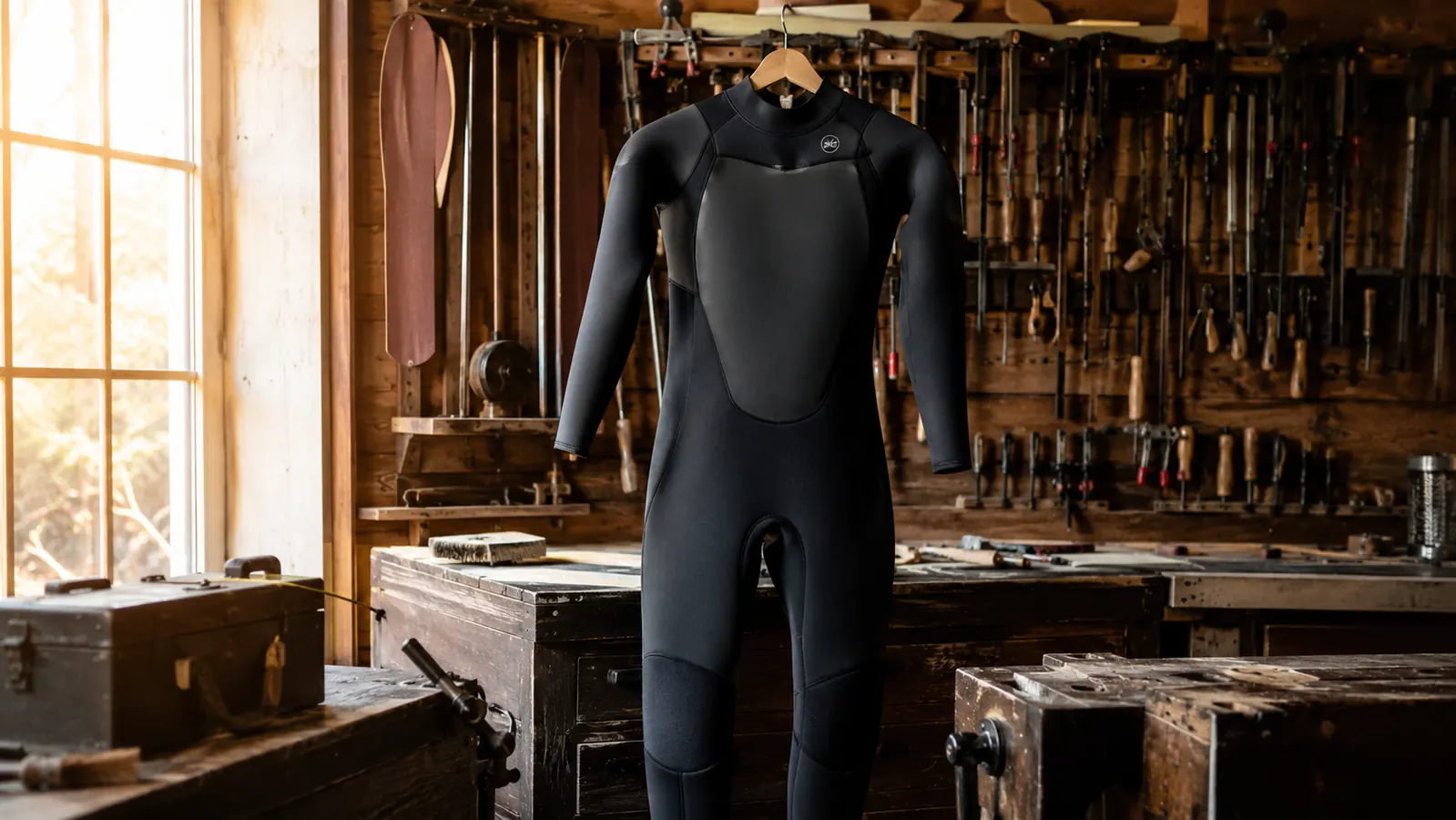
First, the sizing. The shoulders and chest are healthy fit through the mid, and a builder's shoulders measured between sizes will need the bigger of the two. I'm a Large in most divewear and I take the M-Flex truly at the Large; if your chest is two sizes up from your waist, order to the chest and accept a relaxed middle. A 7mm has no give to cover a fitting mistake, and half of every wetsuit complaint I've heard over the years is a size problem wearing a brand's name.
Second, the neck. On the coldest diving of the season the collar let a small draw of cold into the seam before the film warmed and rode past it. That is what it is and it's pretty standard for a 7, and a hood fixes the top of the battle. But if you went from quiet reading that a 7 seals you dry at the neck, the marketing oversold a few degrees.
Third, the plain virtue of a 7mm is a weight when you don't need it. On any day in the mid-sixties and up, this thickness is extra rubber and extra buoyancy you have to muscle in the water. A 7mm is for the cold with a specific job, and nothing about it is the summer suit it isn't. My summer dive stays short, and I say that in your favor.
Alternatives I Considered
I did not come straight at the M-Flex. The SCUBAPRO Everflex 7mm has a longer following and a great entry, and a Henderson 7 is the suit you see on the east side boats with the unmistakable affiliation. Both are honest and both will keep you warm, and in cold water they all get the same weekend. What pulled me to the Mares was the feeling through the shoulders under harness, no binding in the armpit and a collar style that sits proper on the hood a 3. If your town sells the Everflex and not this, that's a good 7 too and I'd trust it.
And the big alternative deserves its turn: the drysuit. It is warmer, period, and for divers who spend whole winters under 45 it is the right tool. It also costs a pile more and asks for training and the routine of under-layers, which is a doorstep a lot of recreational divers don't want to leave food on. I've written the full 7mm versus drysuit comparison separately so you can weigh your own water, and this review stays on the wetsuit side of that question.
What I Liked
- Kept me warm through the dives that used to end my season, in water from 44 to 55 degrees, two seasons running, with no drysuit budget
- The neoprene and zippers genuinely held up through 84 dives and count, no seam roll, no failure at the collar, and one field patch outlasted the rip
- Moves well for a thick suit; the stretch panels let a builder's shoulders breathe in the yoke instead of fighting you the whole dive
- A one-piece, no valves and no class schedule. Rinse it, hang it, and the season grows
Where It Falls Short
- Getting in and out is a real tussle the first handful of weeks; 7mm is thick rubber and it moves only its terms
- Fitting is particular: a wide chest or shoulders sizes up once, so check the fit card before you order and not after
- The collar trickle at the coldest end of the season needs a hood, and no 7mm strays fully dry
- The review library on Amazon is thin, thirty names at this writing, so the long-term record is mostly the two seasons I just gave you
Forty-four on the surface, thirty-two minutes on the bottom, and the cold still a ways behind me when I hung up the hood. That is the dive I had been driving the whole season for.
Who This Is For
This suit is for the diver whose local water lives in the 40s and 50s for half the calendar and whose logbooks started ending every year in October. If you find yourself booking trips around warmth, rearranging your hobby around a season on the shore, this is the suit that hands you four or five months back. I've also written the ten reasons a 7mm extends your dive season if you want the case argued in free form. And if you're ready to look at the whole cold wardrobe, the Mares M-Flex 7mm deserves the first slot on the list.
Who Should Skip It
If the coldest gauge on your year sits above seventy, a 7mm is a storage problem waiting to happen and a 3mm is the honest tool. If you've already committed to a drysuit and the training behind it, adding a 7 on top is a half-measure. And if pulling rubber over your head isn't a trade, physically or by tolerance, this suit will chafe the whole relationship. There is never a 7mm that is the case for the diver whose own water doesn't ask for it.
Give the Cold Season Its Calendar Back
A cold-water kit has one test: whether you come home shivering or smiling. The Mares M-Flex 7mm answered for me, and if you dive under 60, give it the same season I did. Check what it goes for on Amazon today and don't wait for the water to hit the 40s first.
Amazon Check Today's Price on Amazon →