
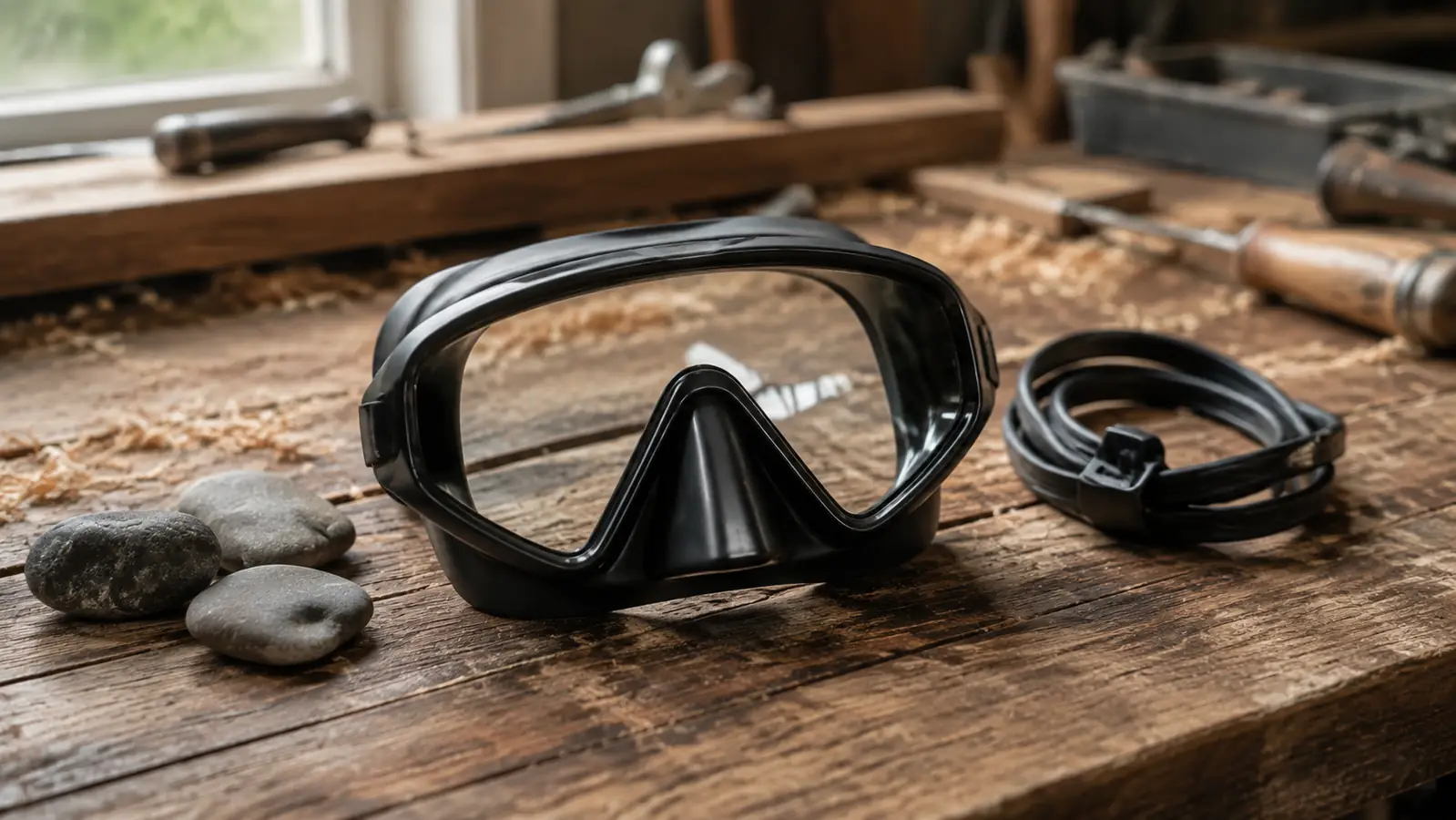
Every dive shop wall tells the same story: a row of framed masks that all promise the same thing and all fit the same nose bridge, never yours. I spent twenty years believing a leaking mask was just part of diving, that fog on the descent was my fault, and that the red stripe across my brow was the price of the sport. Then a dive buddy tossed me his mask on the boat in Cozumel and said try this. Two years and a hundred and eighty dives later, that mask, the Cressi F1, is still in the top of my bag, and it has not leaked once. For a carpenter who makes his living with his hands, that is high praise.
Here is the plain version, the way I would put it across the workbench. Frameless masks do the job with less stuff in the way: no plastic skeleton, no frame seam, less air in front of your eyes. This one, the Cressi F1, has become the most-reviewed mask in its class because it gets the fundamentals right. It folded flat for six plane trips, sealed on a hundred salt-water dives, and survived a winter in the back of my truck. My old framed mask did none of that.
The Frameless Mask That Ended My Twenty Years of Leaks
The Cressi F1 is the most-reviewed mask in its class, and after two years and a hundred and eighty dives it is still the first mask I reach for. See today's price before you read the list, so the reasons mean something.
Amazon Check Today's Price on Amazon →The Ten Reasons, in the Order They Showed Up on My Face
It Folds Flat and Stops Being Fragile
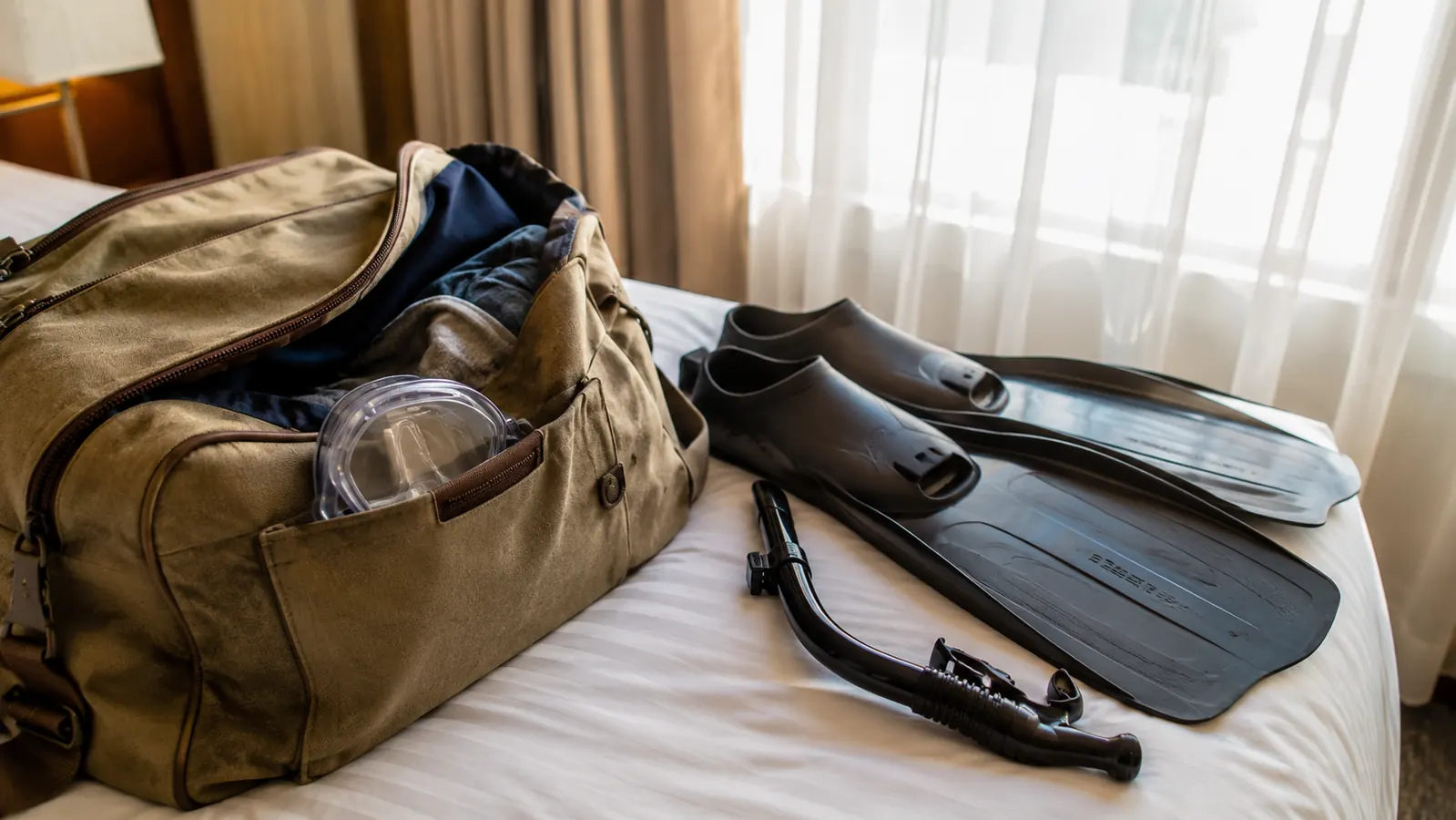
I fly to most of my dive trips, and my old framed mask traveled in a hard case the size of a lunchbox and still cracked at the nose bridge on one trip. The F1 folds flat enough to slide into the side pocket of my dive bag, so the lens never touches anything hard. Two years of checked luggage, zero damage. For a mask I used to wrap like glass, that is worth the switch.
The Silicone Fits Your Face, Not the Other Way Around
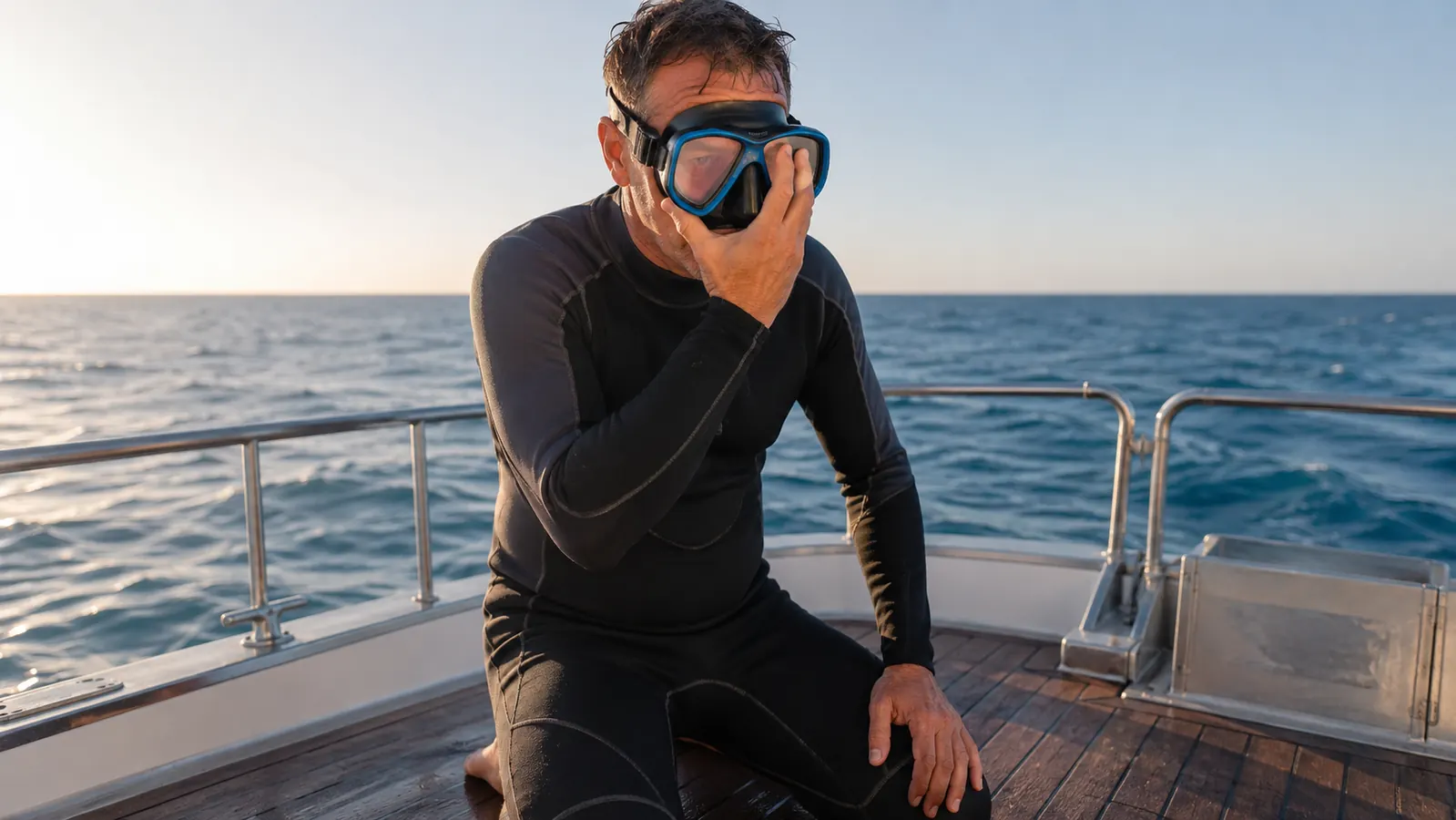
A framed mask has a rigid skeleton behind the skirt, its shape decided in a factory before you put it on. A frameless mask is all silicone, and silicone gives. The F1 presses into my cheeks and brow instead of fighting them, which is why it sealed where my last three framed masks leaked. I blamed my face for two decades. It was never my face.
Less Air Inside Means a Gentler Squeeze at Depth
Every mask carries a pocket of air in front of your eyes. Head to depth and that pocket shrinks and pulls at the mask, the squeeze every diver knows. A frameless mask runs a smaller internal volume because the lens sits close, so the squeeze is weaker and a small exhale through your nose clears the pressure faster. On a ninety-foot wreck dive, that is a difference you feel.
A Mask You Can Clear Without a Workout
When a wave hits you on a drift dive, you half-fill the mask and have to clear it. Less interior volume means less water to push out and a quicker recovery. With the F1 I clear in one short exhale. My old mask took two and a half breaths and a bit of cussing, a long time to be blind on a live boat dive.
No Frame Seam Means Nothing to Rot or Crack
Salt water finds every seam, and on a framed mask the seam is where the skirt meets the frame. That is exactly where my old mask clouded up and cracked after three seasons. The F1 has no frame and no glued joint. It is one molded piece of silicone wrapped around the glass, and I respect that the way I respect a single piece of steel over something held together with bolts.
It Rides Close to Your Eyes and Reads Natural
The farther the glass sits from your eyes, the more you look through a box instead of out at the water. The F1 holds the lens close and roughly parallel to your face, so your brain reads the reef the way it reads a room. That comfort is hard to put a number on, but it is why I come up less tired than with masks that put five inches of plastic and air between me and the wall.
Less Air to Fog Means Clearer Vision Faster
Fog happens when the air inside a mask is warmer than the glass. A low-volume mask has less air to warm up, so I fog less on the descent and recover quicker. The F1 is not fog-proof, no mask is, and I still spit in the glass before every dive. But twenty minutes in, my world is clear long before my old mask behaved.
Current Stops Grabbing It by the Head
A tall framed mask catches water like a snow plow when you turn to check your buddy, and that drag works your neck all dive. The F1's low profile slips through, and because there is less buoyant air up high, it does not fight my trim. In a stiff current the difference is obvious, right in my neck.
The Silicone Holds Up Like It Means It
Silicone eventually takes a set. But a frameless skirt flexes over its whole surface instead of creasing at one fixed seam, so the Cressi has kept its spring through two years and a hundred and eighty dives, including a hundred salt-water soaks and a season in the back of my truck. The strap still stretches like new.
You Stop Thinking About It, Which Is the Whole Point
The best gear has one job, to get out of the way, and the F1 does. I put it on, do the suck test, and forget it exists until the surface interval. I have owned masks that cost more that I thought about on every dive. This one costs less and I do not. That is why it is the mask in the top of my bag.
What I'd Skip
Honest means honest, so here is the other side. The F1 is not a wide-angle mask. If you shoot video underwater or spend whole dives tracking a buddy at the edge of your sight, a proper wide-lens mask will show you more to the side; I put the F1 up against the SCUBAPRO Spectra in a head-to-head, and field of view is the one round the Spectra clearly wins. And if you have a wider face, or dive in a hood every weekend, watch the F1's nose pocket, it runs on the modest side. It is built for an average adult face, and mine happens to be exactly that. If yours is bigger, put one on your face at a shop before you order. That five minutes is cheaper than a return.
Two years and a hundred and eighty dives in, mine still seals like the day it arrived.
It is rare when the less expensive option turns out to be the better tool, and rarer still in this sport. The F1 is that case. If any one of these ten reasons sounds like a dive you have done, order one, hold it to your face in the kitchen, and do the suck test. If it seals there, it will seal underwater. I have the years of leaks to compare it against, and I would not go back.
Ten Reasons, One Mask
If any of these reasons sound like the dives you actually do, the F1 is worth a look at today's price. I wrote the full two-year review up here, and the head-to-head against the SCUBAPRO right there, in case you want the long version before you buy.
Amazon Check Today's Price on Amazon →