
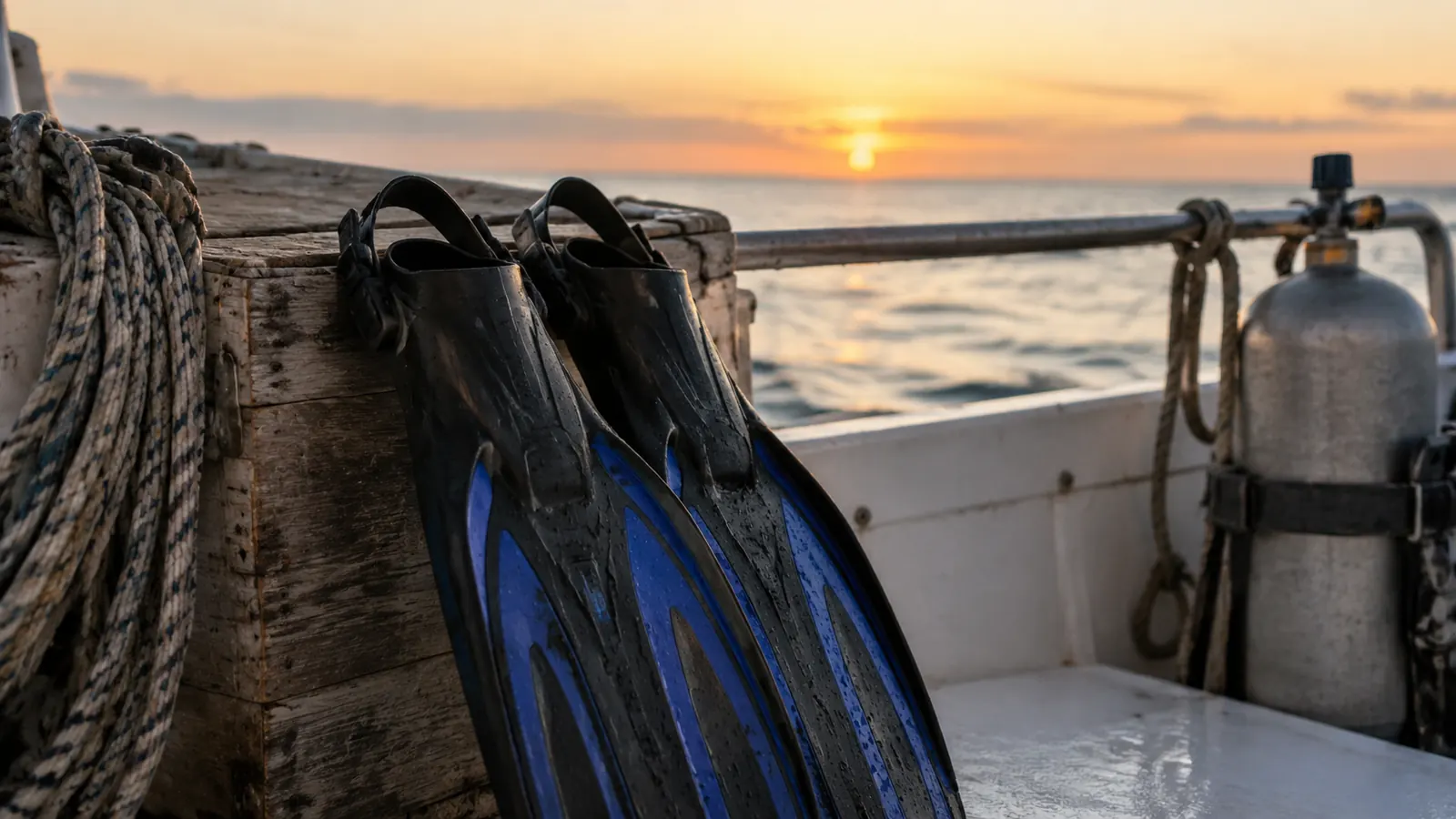
Every pair of fins I used before I owned my own had the same problem. Someone else's legs had already used them. The blades were soft. The straps were stretched to another foot. When I needed real power to hold my line in a current, the fins just flexed and gave me nothing. I would hang in one place and kick hard, and the dive master would watch me like a kid at the deep end.
I have been a carpenter for forty years, so I know what a tool is worth after two hundred strangers have held it. A rental fin is exactly that. Six years ago I bought the pair I saw on every rental rack and in every gear bag on every boat. They were the Cressi Pro Light open-heel fins. I have more than two hundred dives on them now. Every line of this review comes from those dives.
First, who I am. I dive thirty-five to a hundred and ten feet. I dive cold quarry water and warm reef water. No rebreather, no cave line. My dive is about an hour, and I want gear that works without me watching it every second. If a fin makes me think about it, that fin is a distraction I do not need.
The Quick Verdict
The rental hangar favorite is the real deal, with two honest warts: a stiff blade that finds a weak ankle, and a size chart that runs small enough to cost a big footed diver a second pair.
Amazon Check Today's Price →The fin the rental boats rely on, at today's price
If you keep renting, you keep the mystery straps and the blades that went soft years ago. Own the fins that have stayed on my feet for six years without a complaint. Check today's price on Amazon before you head out.
Amazon Check The Price on Amazon -> →How I've Used These Fins
These fins have worked in three kinds of water. The old quarry near my house, where you walk in across broken rock and the water turns green at thirty feet. The gulf in summer, warm and clear and flat. And a week of wrecks off the Carolina coast, where a current runs all day. A fin that behaves in all three has no hidden weakness.
Six years of salt water, hot sun, and truck grime and they still track where I point them. They have sat through a full winter in a cold shed and come back. I do not think about them in the water, which is the best thing a diver can say about any fin.
In the water the balance is real. The foot pocket sits flat. The blade holds the angle I set, and it does not wander down or ride up. The weight is gone once you are under. On the deck that matters, when you are already carrying a full tank and a weight belt.
I kick slow and easy most of the time. Inside a wreck I switch to a frog kick so the silt underneath stays put. The Pro Light follows both styles without complaint. A fin that argues with your kick is a fin you will sell after ten dives.
Flutter and frog are different sports, and this fin is honest about both. A flutter stroke uses the whole blade and hands the energy back at the end of the swing, which is why I can hold a slow kick for a full hour. The frog kick works the inside edge and the tip, and on a soft fin it just folds flat. The Pro Light stays firm on that inside edge so I can work a wreck corridor without turning the bottom up.
Let me put a number on the abuse. This pair has done the quarry most Saturdays and a week of wrecks every fall for six seasons. It has been thumped on decks, buried under gear in the truck, and left in the sun through an entire summer. There is a shelf in my shop where my tools end up when they let me down. These fins have never met that shelf.
Cold water is where a fin earns its keep. In crisp sixty degree water nobody wants to fight a heavy blade. I wear river boots with warm socks under these open heel fins, and the foot stays warm while the blade keeps pushing. Warmth and thrust in the same pair is a rare thing.
The Blade Is Stiff. That Is Both Good and Bad News
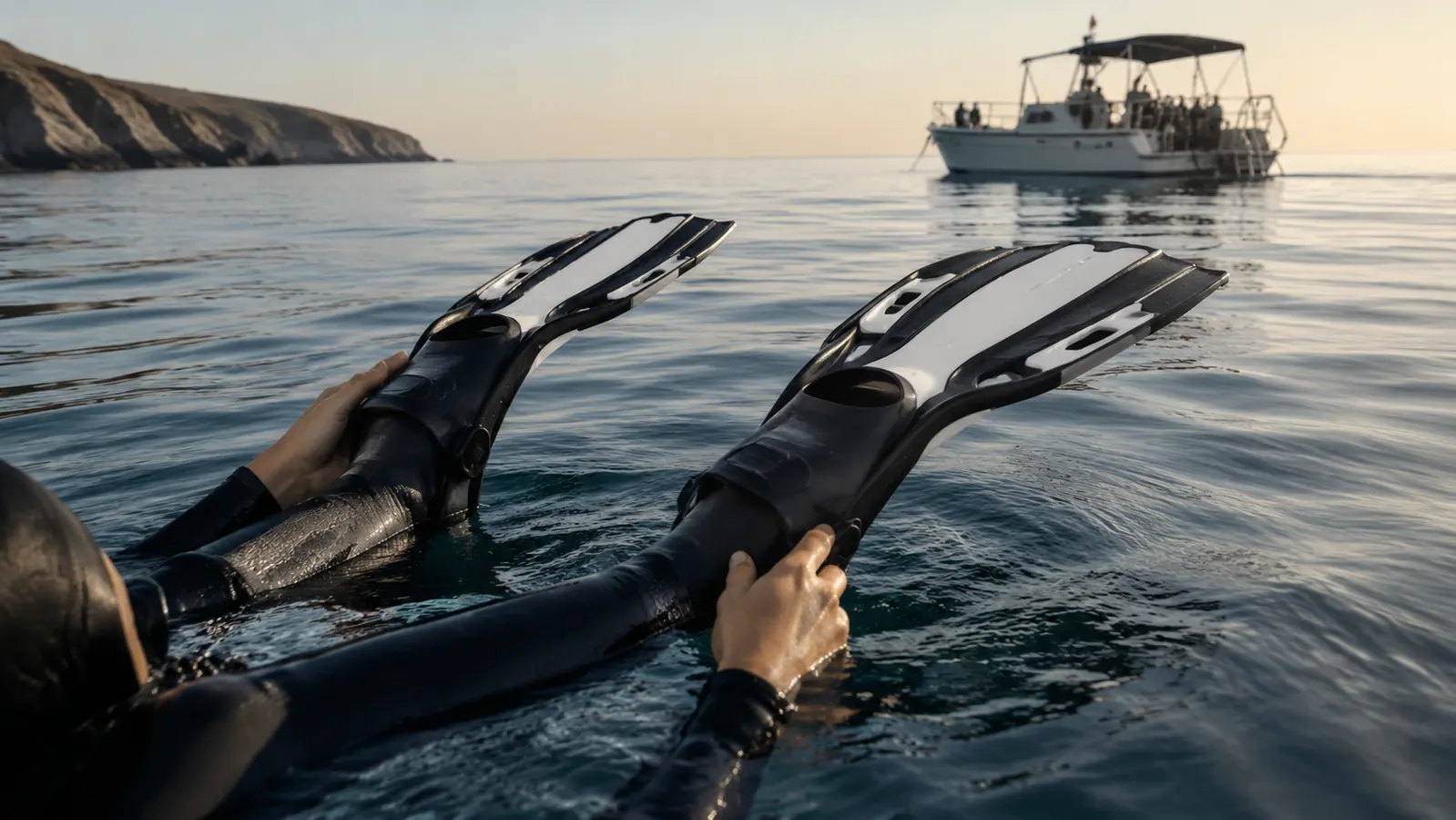
Now the honest note first. The Pro Light is light on your feet, but the blade is a spring, not a noodle. It is not a rubber fin and it is not a soft one. The stiffness is the point. The blade loads on the push and gives the energy back on the return.
If you have strong legs, you will like it. My years of moving lumber and cabinets gave me the calves to run it. After a week of three dives a day, my legs were not what hurt.
The bad part is the desk. A person who sits for a living will feel this blade in the front of the shin on the first long swim. It uses a muscle group that a chair never trains. The fix is three easy dives and a good stretch. The first session is the fin talking about your own leg, not about itself. Give it that time before you judge it.
Compare them to the fins beside them on the rack and the Pro Light sits in the firm middle. It is firmer than a holiday fin and softer than a scooter fin. For a normal diver that middle is where they can live comfortably.
Cold water firms the blade up too, worth knowing before your first spring dive. In the quarry at the end of April, water in the mid-fifties, the thermoplastic gets a touch stiffer and the rebound comes back quicker. More push for the same swing. In warm reef water it runs softer and easier. One pair does both.
I should be the adult in the room about the stiffness. The blade is what it is, and no strap position makes it soft. If your legs are light, the stiffness will not fade after two more dives. It waits for the leg to catch up, and for a lot of us it is worth the wait.
The Strap Is What Wears Out
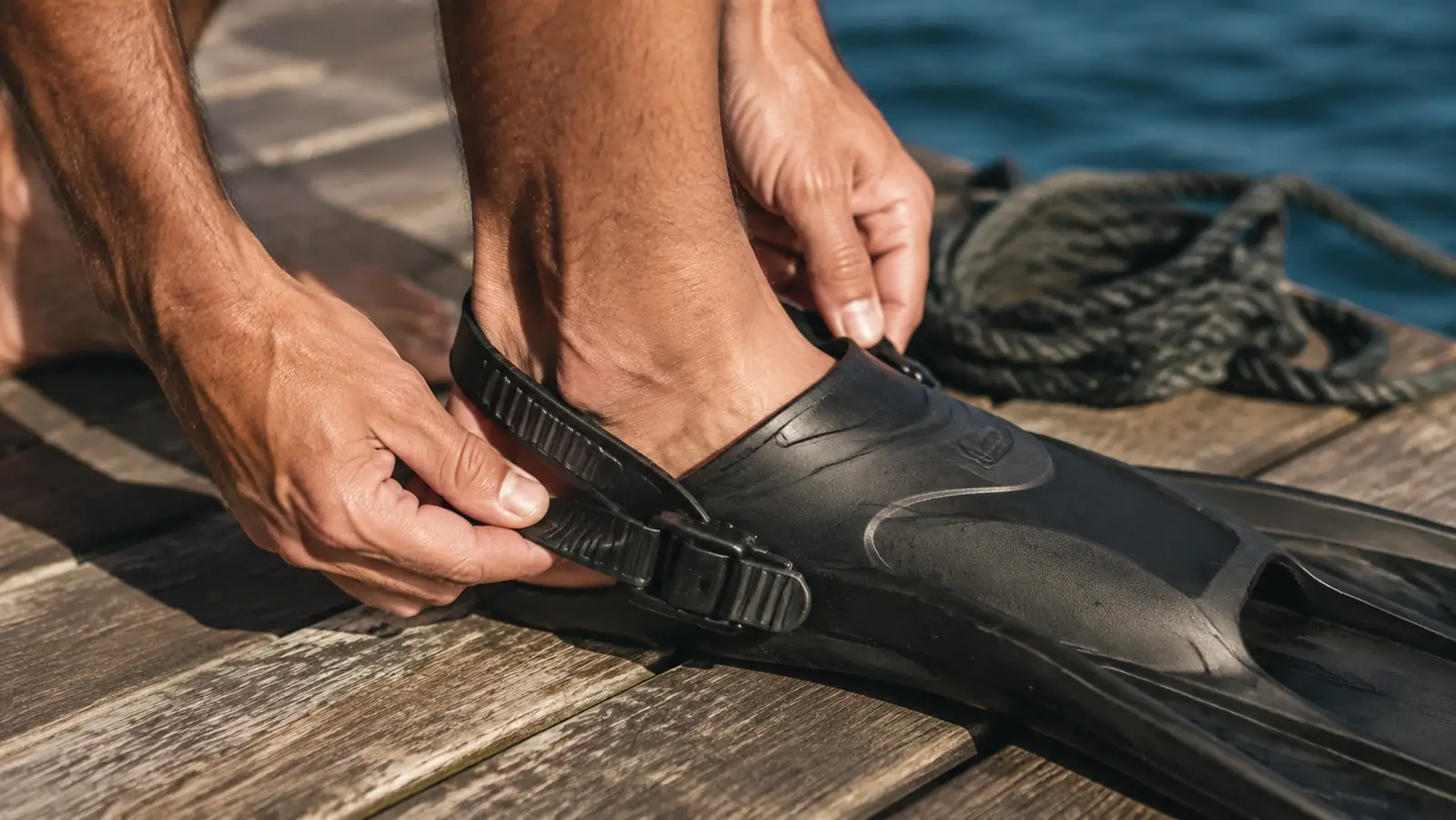
Every open fin wears out somewhere, and it is never the blade. It is the strap. The Pro Light holds the heel with a spring clip, the design everyone uses now because it works with gloves. Pull the strap, it clicks, and it holds where you set it. It is an honest design.
Cressi put a proper clip on this fin. In six years I have replaced exactly one strap, on the right side, after one wet winter. Salt is the enemy of the spring. Mine picked up grit and began to let the strap slip a little during a strong kick.
The fix cost a few dollars and ten minutes on the boat deck. A replacement strap and a small screwdriver now live in my fin bag. A piece of gear that you can fix for a couple of dollars is a piece you keep. That is the story of this fin.
The strap is a part designed to wear. That it gives out before the blade does is a good thing, because a two dollar strap is far easier to replace than a blade. This fin is built around that simple idea.
Keep the spring and the buckle clean and they last for years. Rinse them with fresh water, dry them, and the clamp holds. I have watched a rental buckle go soft over one sandy trip because nobody rinsed it. A clean spring is a steady spring.
I am not blind to the spring strap crowd. Every trip somebody asks why I have not swapped to a bungee. It stretches over the boot in one motion and never comes loose between dives. The catch is that it fits one way. Whatever tension the stretch holds is the fit, summer boot or winter boot alike. The buckle on this fin takes two motions to get on, but every click of adjustment is mine. When I switch from my thin summer boot to my river boot in the fall, one pull sets the fit. One boot all year, a spring strap is the upgrade. Two boots on the shelf, the buckle wins.
Six years, two hundred dives, one strap. That is the quiet that lets you plan a week of diving and never worry.
The Sizing Caveat: Big Feet, Read This
Now the honest part the reviews skip, and one reason this is a four and not a five. The sizing runs half a size small at the top of the band. I wear an eleven boot. In an eleven size fin, my toes were against the end. I went up to a twelve and it fits right.
A buddy of mine wears a ten and a half and sits fine at the bottom of the same band. So it is the eleven, twelve, or higher crowd that has to move. If that is you, order a size up and read the recent size reviews below the listing before you pay.
Boot thickness matters too. A soft three millimetre boot fits tighter in the same fin than a firm five millimetre boot. If you change boots, the same fin fits different. Hold that thought when you read the size chart.
Fit is simple. Put on the boot you will dive with. The pocket should fit snug, with no pinch across the ball of the foot and no pressure on the toes. If you are between sizes, go up, never down, because the boot takes up room. That one line saves a lot of returns.
The Pro Light follows the boot, not the other way around. Buy the boot you like, then choose the fin in the band that the boot fills. That order saves the week of toe pinching that ends most returns.
Six Years of Salt and the Back of a Truck
I do not treat these like china. They ride in the bed of my pickup with the rest of the gear, under a tarp. They get a rinse when I remember. They sit the whole winter on a shelf in a cold shed. After all of that they have no cracks, no soft spots, and nothing loose.
That is the whole report: nothing happened. For a diver that is the best kind of review. You want gear that is boring. Boring fins on your feet let you look at the wreck instead of at your shins. My fuller six year review of these same fins is also on this site.
I track hours the way I track my tools. This pair is on its second set of straps and the same hard plastic blade. In all that time it has never once failed a dive for me.
Now the parts you only see if you look. The foot pocket is where the years show. The lining has held together better than the rental pairs I watched die at the quarry, no seams letting go where the boot folds. The heel cup has polished smooth where my boot rides, and the sole has gone a little soft under the ball of the foot, but not so soft that I feel the deck through it. All cosmetic. The fit has not moved a millimeter.
How It Sits Against the Other Fins
If you are deciding between this fin and a split fin, the full write up is in the split fin comparison on this site. The short of it is simple. A split fin feels light and easy at low speed. A blade fin gives you a real push when the current pulls.
For my diving, drift and wrecks in a current, the blade gets me back to the boat when a split would slow down. That is the honest difference I live with. The price of the better blade fins has climbed every season since I bought these, and the Pro Light is still one of the sensible ones for the money.
The other question is open heel versus full foot. For me the boot decides it. An open heel lets me wear a neoprene boot, and a boot saves you on a rocky shore, in cold water, and over the reef. A full foot fin is fine for warm water and a snorkel. For what I do, give me the open heel.
The larger lesson is about the fins you already own. Most divers trade too late and then too often. A good fin is one you keep because it keeps working, and that is exactly what has happened here. I have not shopped for a blade fin in four years.
If you are cross-shopping the Cressi lineup, the other name that comes up is the Gara, built for a different job. The Gara leans toward freediving and snorkeling, longer and stiffer, a full foot pocket tuned for a slow deep rhythm at the surface. A fine fin for that job. It is also a bare foot fin, so no boot underneath, so cold water is off the table and a rocky shore entry is a different kind of day. The Pro Light is the scuba fin, boot friendly, shorter, more forgiving, built for the one hour recreational dive. Ask what dives you actually booked. That answer decides it.
What I Liked
- Genuine balance in the water and an easy leg over a long dive
- A proven, replaceable design that has run six years for me
- Stands up to salt, sun, truck beds, and a cold winter
- One pair covers warm water and cold water with a boot
- A fair price once you order the right size
Where It Falls Short
- The stiff blade asks the front of the shin for work on the first dive
- Sizing runs small at the top of the band
- The heel strap is a wear part, and salt decides how long
Who This Is For
Buy the Cressi Pro Light if you want one pair of fins for everything, if you have a strong leg behind a firm blade, and if you are done with gear that lets you down. This is the fin the rental boats stock, and a rental boat has tested the ones that exist. They have good reasons.
I have worked a hands on trade for forty years. I can tell the difference between a tool that holds up and one that does not. The Pro Light holds up. That is the highest thing an old craftsman will say about any piece of gear.
For me the price of the blade matters less than the freedom from thought. I have never once gone to a dive and worried about these fins, and that is the whole point. Buy them once, fit them twice if you have feet my size. On the boat, I stop thinking.
Who Should Skip It
Pass on this fin if your ankles or shins give you trouble, because a stiff blade asks them to work on every single dive. Pass on it if you only dive in warm, calm water for an hour near the boat, because you will never use that blade hard enough to enjoy it.
And be honest about the size chart before you order. My four out of five is about the sizing more than the fin. The blade and the build are worth five. The sizing that made me buy a second pair is the honest shortfall.
On the first fin for a brand new diver, I will be the honest voice. I would put an open water student on something softer first. Hovering, clearing your mask, reading your buoyancy, all of that is easier to practice when the blade is not asking your shin for work at the same time. Plenty of new divers buy the stiff fin first and get humbled on dive one. A season on a soft fin, then this one.
The honest review, in three lines
Go up a size if you have big feet. Give the blade three dives before you judge it. Carry a spare strap in your bag. That is the whole honest verdict. Check today's price on Amazon while it is in stock.
Amazon Check The Price on Amazon -> →