
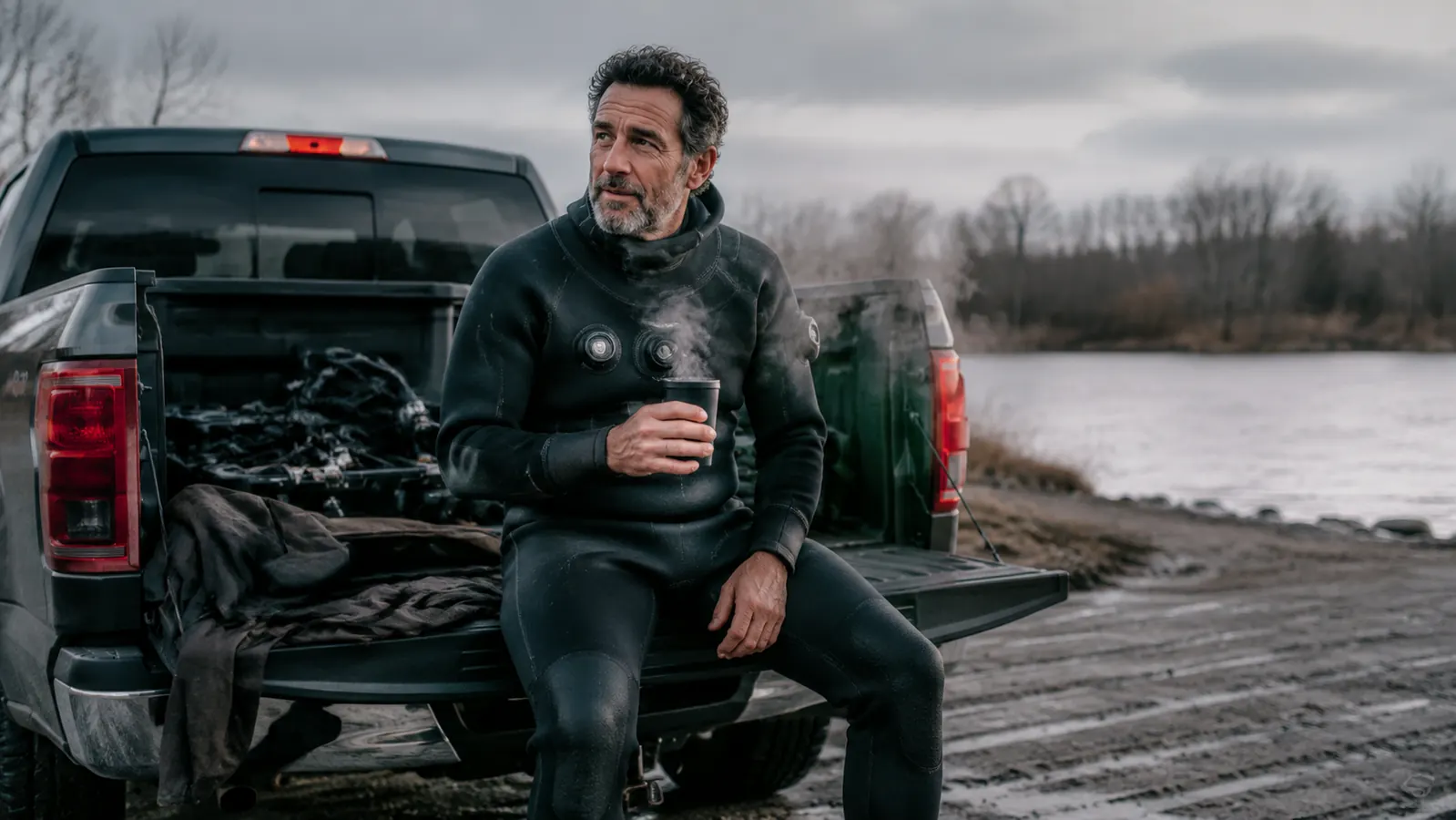
Nobody warns you that the real fight with a thick suit happens on dry land. My first morning with the Mares M-Flex 7mm, I stood on the gravel of a boat ramp with one leg in the suit and one leg out, both arms pointing at the sky like they had somewhere better to be, while the fellow at the launch next to me wore the look of a man about to enjoy a show. The water under the hull read 47 degrees, and it was honestly the easier half of the day. I am sixty-one years old, I have worked my shoulders against crown molding and stair treads for forty years, and I know the difference between a tool fighting me and a tool that needs a method. The M-Flex wants a method, and sorting that out is exactly the thing every review I had read skipped.
Since we are talking straight from the first handshake, here is who is talking. Name is Ray Merritt. I build and restore woodwork for a living and I dive any weekend the water allows. I bought this suit with my own money, no one on the brand side knows me from a hired hand, and I kept my season the way I keep a job ledger, dive by dive, with the real numbers attached. The long term write-up on this site tells you how the M-Flex keeps a body warm through a Maine winter, and that part is true. This piece is the other side of the ledger, what a thick suit actually charges you that the ads, the size charts, and the good reviews never mention.
The Quick Verdict
A warm, honest 7mm that does the one job a cold-water suit is hired for. Plan for extra lead, plan for a getting-in ritual, and buy the size your chest measures rather than the one your ego orders. I would buy it again, with a month of practice priced in.
Amazon Check Today's Price →The 7mm That Spends Its Warmth on You, Not on the Dock
Before you order, read the weight and sizing notes in this review. They are the two things that decide whether the M-Flex becomes your whole cold season or a season of arguments. If they read like a fair trade to you, see what the suit goes for on Amazon today.
Amazon Check Today's Price on Amazon →The Season Behind This Review
Forty-three open-water dives between the first Saturday of November and the last Friday of March, logged in a pocket notebook the way I keep a field book on a jobsite. Surface water ran from the high 40s to the mid 50s across the whole season, and I spent most of my bottom time between 55 and 70 feet on ledges I could find in the dark by touch. Every dive got the same five lines: date, surface temp, max depth, bottom time, and an honest line about whether I wanted a second dive that day. That last column, the one about the second dive, is what separates a gear review from a guess.
A few weeks in I added a second set of numbers to that log, the set nobody asks for. How long the gear-up ceremony took, how much more lead I was carrying than my old spring suit asked for, and exactly where the suit squeezed hardest, both on the shore and in the water. That row is the honest review, because the parts of a thick suit that shape your whole season are the parts nobody films.
The Getting-In Ritual Nobody Scripts
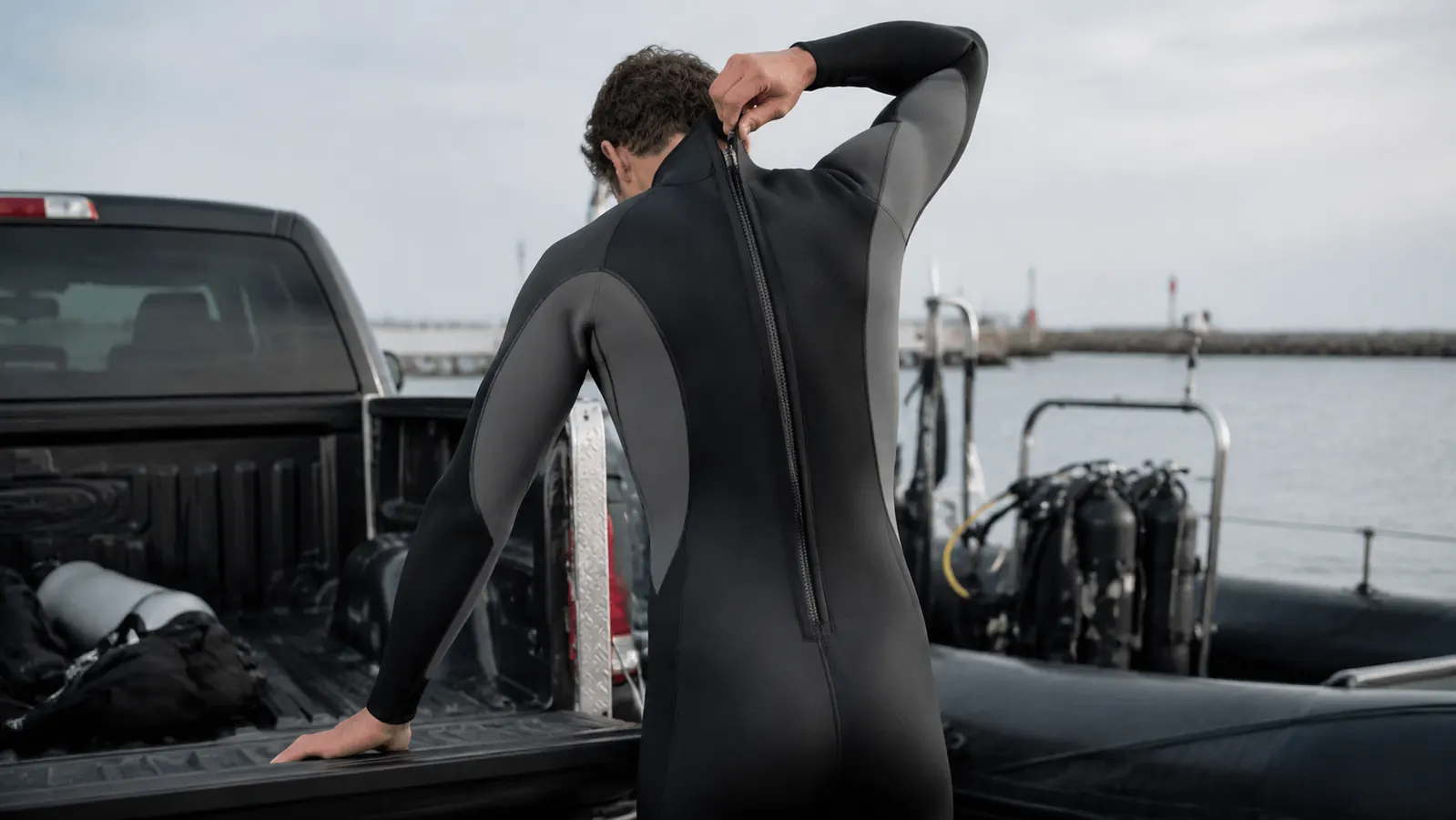
A one-piece 7mm plays by different rules than a 5mm in the dressing department. The rubber is stiff enough to hold its own shape, so it does not roll up over the knee the way a light suit will. Every part of it wants to lie flat while you are trying to wrap it around an arm. My first weekend measured fifteen minutes total from laying the suit out to a finished zip, including a five minute argument at the shoulder that I lost. By dive four I had settled on the order every cold-water diver eventually agrees on: feet first with the calf rolled up so the foot slides clean, heel seated, draw the rubber up over the knee in one fold, then the second leg, the arms last, and only then the shoulders and the zipper. Do it in that order and the suit apologizes.
The zipper deserves its own paragraph because it is the part of a one-piece that runs your daily life. It is a long back zip, and reaching back over your shoulder with a cold fist is a reach some bodies simply do not have. On our boat, the two divers on my end of the size range managed it with a lean against the truck gate, and the one man with the smaller build always asked the dock hand, which is an honest answer and often the only one. The zip itself is the sturdiest part of the suit, not the problem: forty-three pulls, half of them wet, one of them rushed, and it never bound on a single tooth.
The honest part of the ritual is the time. The first month I budgeted fifteen minutes as a plan; by spring I had it down to eight, and that eight minutes is the real fee of owning a 7mm. Running the long back zip solo is its own lesson, and I took it early on a warm day: hook the thumb under the pull, fold the wrist over the shoulder blade, then reach. A paracord loop on the pull gives a cold thumb real grip. Getting out is its own dance. I peel the shoulders with the flats of both hands, never a hooked finger, and I stand on the lower leg to draw the calf off instead of heaving at it. If reading that makes you want to click your way out of here, save the suit money, because that fee comes back on every trip you take all winter.
The water was 46 degrees on the surface, I spent close to an hour on the bottom, and on the ride home I had no story to tell about being cold. That is the whole proof the test needed.
What a Thick Suit Does to Your Weight Belt
No two weight checks have ever survived my switch to cold-water suits, and this one did not either. The first five minutes in the M-Flex I floated like a cork caught in a good mood, so I hung steel, dive after dive, until the check at the boat settled. It shook out to about four more pounds than my old spring suit ever asked for. And here is the honest math: this is not just extra weight in the trunk, this is a new trim character to learn. I now set my weight by a proper check on the boat before every dive instead of trusting the number I wrote down in April.
The other half of the coin lives at depth. Thick neoprene submits to the pressure as you descend, so the dividend of the suit is different on the bottom than it is at the tie-off, and when you climb the water column that buoyancy starts writing checks again in the last stretch of the dive. There is a moment near a stop where you are fighting to hold depth that your gauge insists is correct, and every thick suit on the market does that, and the Mares does not dodge it either. Meet it at the surface station and it forgives you; meet it for the first time on dive two of a week and it will not.
Sizing Honesty: The Chart Bends Where You Do
Thick rubber does not give like a lighter suit, so the size that reads fine on paper either becomes the best thing you own or a season-long argument. The rule I landed on after a winter is to size to the chest, not to the waist and not to the height column. Run the tape across the ribs at a full breath and order the number that fits that ring. When you fall between two chest sizes, take the larger one, because the shoulder yoke is where a full suit lives or dies. A little room in the middle you will never notice. A tight yoke you will be measuring at minute ten of every dive. And the chart assumes a body half my age. Sixty-one years of sawing and lifting left my shoulders and my middle at odds, so I ran the tape across the ribs on a full breath and ordered the number it owns, not the size my old habit wanted. For a body that has done some living, take the tape first and argue with it second.
The second thing nobody tells you: it gets easier, and by design. Fresh neoprene ships stiff, and by the fifth or sixth exit it has softened enough to stop arguing with your shoulder. The suit that feels two sizes too short in the first week is not a wrong suit, it is a green suit. Give it a month of wear in the yard, a couple mild dives, and patience. That softening is the honest reason to buy a full season ahead instead of a week before the water turns.
The Stretch Panels Change the Reach
The name on the box is the story. Mares builds the M-Flex with flex panels across the shoulders, the upper chest, and down the sides, and that is the whole difference from a stiff 7mm that swims like a length of hose. When a spare regulator rolled under the bench and I reached for it mid-gear-up, there was no bind at the armpit and no pop at the yoke. Stiff suits make you swim around your own gear; this one moves with the harness instead of against it. The honest trade is that stretch is give, and give is a touch less crush-proof at sixty feet, where the flex panel packs down sooner than firm rubber. I buy that warmth back with a hood and call it square.
The Care a 7mm Demands Back
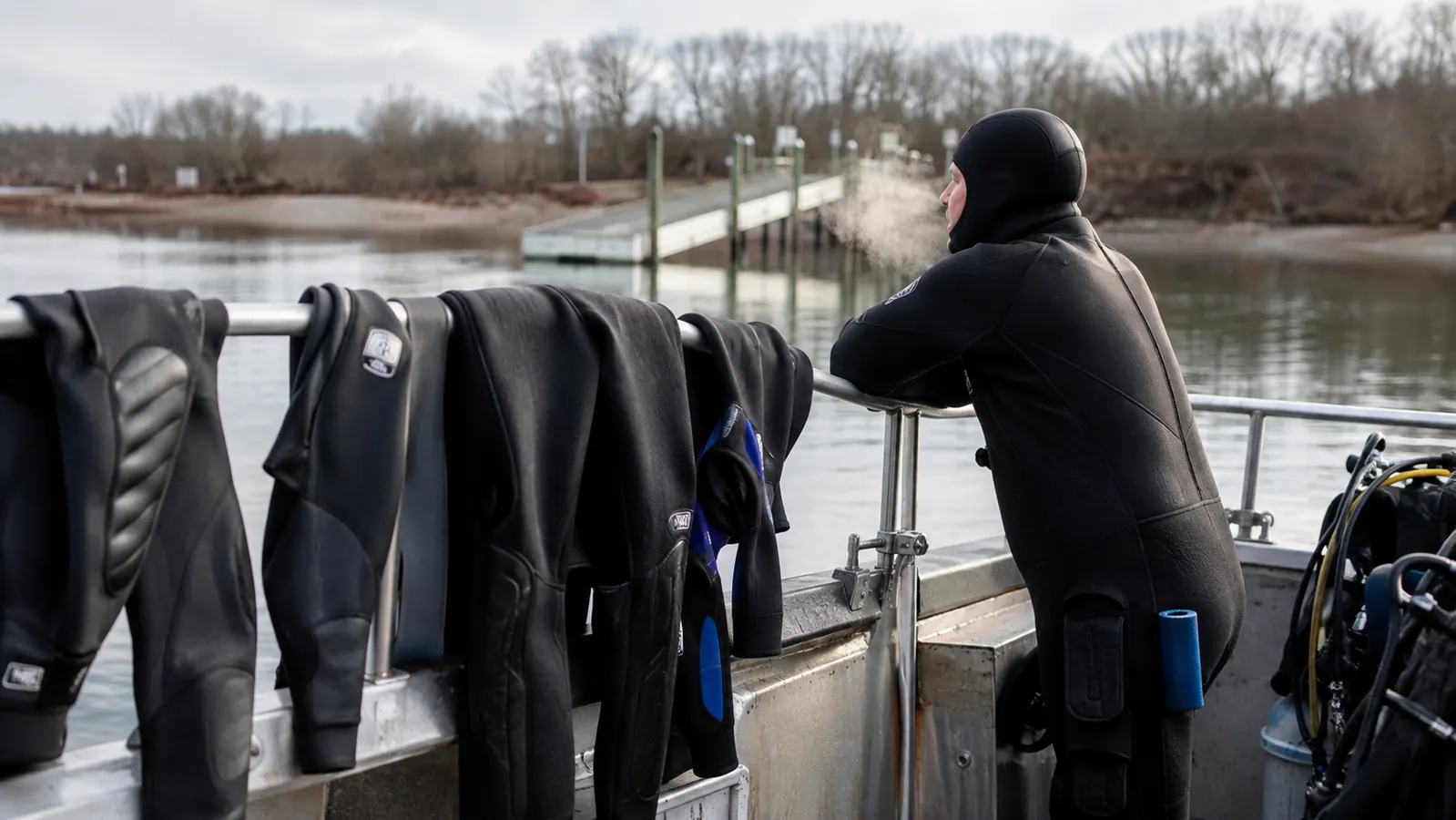
A 7mm stores more neoprene against you, so it takes on more of you, and that is where the famous smell comes from if you let it. I rinse mine inside out in the tub with warm water and a capful of wetsuit shampoo, then hang it inside out on a wide hanger on the porch, out of the sun. If you skip the rinse, even one long season lets the interior crust, and no soap rebuilds a year that got out ahead of you. The thicker you dive, the longer it will punish a skip.
Do not let it dry hanging by the shoulders from a thin hook, because the neoprene creases, and the crease at the shoulder is where a split begins a couple of winters in. I hang mine folded at the middle over a wide dowel, like a blanket, in a cool room, and I never fold it under anything. It sounds like fuss, and it is, but a 7mm that wants to last wants the same care you would give a good tool after a wet day on the site. Treat it like edge tool steel and it will outstay the pickup. Seven millimeters of rubber takes twice as long to dry as a thin suit, so I never pack mine damp. Mildew starts in the folds, the crotch seam and the armpits, where air reaches last, so I never leave the suit wadded in the bottom of a dive bag.
The Honest Weak Points, Front and Center
Weak point one is a real part of the season: the dock. The same rubber that is a friend underwater is a heavy, slow coat on the land, and a 7mm will almost see you warm standing over your gear in the sun. You dress in whatever scrap of shade you can find, you sweat while you do it, and that heat rides with you down on the first cold descent. It is the reverse of the brochure's story, and it costs me a minute of squirm on the first drop of every dive. I take the swim to the mooring slow and let the water do the cooling, because a 7mm sheds heat on land only at its own pace.
Weak point two is the trickle at the collar on the sincerely cold days. No suit keeps water out entirely, and the M-Flex says hello to that within the first thirty seconds of a descent. Any hood ends the conversation, but those photos with a dry diver all the way down were not taken in this suit, they were taken in a camera's craft. Buy the hood at the same stop.
Weak point three is on the surface. A 7mm holds your heat so well that after a long cold ride to the site it can fog your mask before you leave the deck, especially if you kept the hood up for the ride. It is a small and silly thing. It is also exactly the small and silly thing a glowing review never gets around to.
What I Liked
- Keeps the core warm through water into the mid 40s, longer than any 5mm I have owned
- The back zip survived the whole season, forty-some pulls, wet, salt, rush, without a tooth binding
- The shoulder yoke welcomes a working body once the first five dives are behind you
- The flex panels make the reach feel like a lighter suit without giving up the warmth
Where It Falls Short
- The long back zipper genuinely asks for a helper or a post, and the exit is its own small dance
- Wants about four pounds of new lead and a real lesson in how the trim moves at a stop
- The size chart offers the mercy you might wish for, measure the chest instead
- Above about 62 degrees it becomes a heat trap on the dock with no place to put the heat
Who This Suit Is For
Buy the M-Flex if your water sits in the 40s to low 60s for a good part of the year and you would rather add lead than hang your fins up until May. Buy it if a dry suit feels like a class schedule. The thick suit is the honest middle road, a yard of good neoprene, a zipper that wants a friend, and a whole winter, literally, recovered. If that reads like a bargain to you instead of a chore, Mares is trading you square, and this suit will trade you square back.
Who Should Keep Looking
Skip it if your coldest water of the year still tops 65, because there it is a heater with nowhere to spend its heat. Skip it if you always dive alone and cannot lean on anybody at the dock, because a back zipper with no helper will age you before the season is out. And if your winter is truly water in the high 30s, the honest answer is that a dry suit does that job better than any wetsuit can reach. I have written the whole decision out in my 7mm versus dry suit comparison so you can weigh both bills before you spend.
Know the Trade-Offs Before the Box Stops at Your Door
Every thick suit charges you minutes on the bank and a little extra lead. That trade is the whole of this review, and the Mares trades them the honest way. If the getting-in fee looks like fair rent for a winter of good water, look at what the suit goes for today and give the size chart the same honesty I failed to give it my first time.
Amazon Check Today's Price on Amazon →